English
 Español
 tiếng việt
 русский
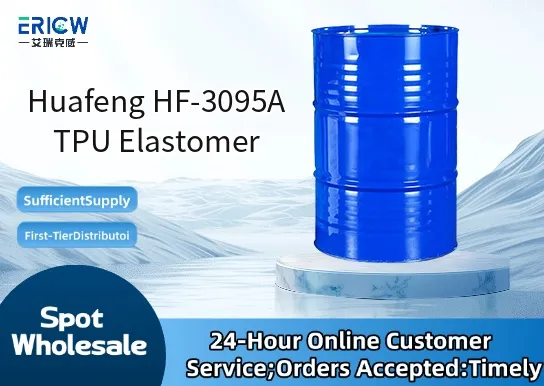
Excellent abrasion resistance for demanding mechanical environments.
Outstanding flexibility and low-temperature toughness down to –40 °C.
Good oil, grease, and hydrocarbon resistance suitable for industrial contact.
High melt flow index enabling efficient processing via extrusion and injection molding.
Halogen-free formulation compliant with RoHS and REACH regulatory requirements.
Automotive interior trim components including instrument panel skins and door armrests.
Industrial hoses and pneumatic tubing requiring dynamic flex life and chemical resilience.
Consumer electronics protective casings and wearable device bands.
Medical-grade non-invasive tubing and ergonomic grips for handheld devices.
Footwear midsoles and outsole overlays requiring rebound elasticity and wear durability.
| Chemical Type | Aliphatic polyester-based thermoplastic polyurethane |
| Product Form | Pellets (free-flowing, cylindrical) |
| Appearance | Off-white to light beige translucent granules |
| Density (g/cm³) | 1.18–1.20 (ASTM D792) |
| Melt Flow Index (g/10 min) | 12–16 (210 °C/2.16 kg, ASTM D1238) |
| Hardness (Shore A) | 95 ± 2 (ASTM D2240) |
| Tensile Strength (MPa) | 38–42 (ASTM D412) |
| Elongation at Break (%) | 520–580 (ASTM D412) |
Q1: What are the key processing methods suitable for HF-3095A?
A: HF-3095A is designed for melt-processing techniques including extrusion, injection molding, and blow molding. It exhibits good melt stability and low viscosity at typical processing temperatures, enabling smooth flow and uniform dispersion in composite systems.
Q2: Is HF-3095A compatible with common thermoplastics such as PVC, ABS, or polyolefins?
A: HF-3095A demonstrates good compatibility with a range of thermoplastics, particularly when used as a compatibilizer or impact modifier. Successful blending has been reported with rigid PVC and ABS; compatibility with polyolefins may require evaluation of interfacial adhesion and may benefit from tailored compatibilization strategies.
Q3: How does HF-3095A perform under elevated temperature and humidity conditions?
A: As a polyester-based TPU elastomer, HF-3095A offers balanced thermal resistance and moderate hydrolytic stability. Prolonged exposure to high humidity and elevated temperatures may affect long-term mechanical retention; drying prior to processing and moisture-sensitive applications are recommended to maintain optimal performance.
Q4: Can HF-3095A be used in flexible film or coating formulations?
A: Yes — HF-3095A is frequently employed in flexible film applications requiring toughness, clarity, and abrasion resistance. It can be solution-cast or co-extruded, and its film-forming behavior supports good surface finish and dimensional stability across varying thicknesses.
Contact With Us:
E-mail: wangxingqiang@ericwchem.com
Have a Questions? Call Us:
Add:
Building A1, Jiete Industrial Park, Huangpu District, Guangzhou City, Guangdong Province, China