English
 Español
 tiếng việt
 русский
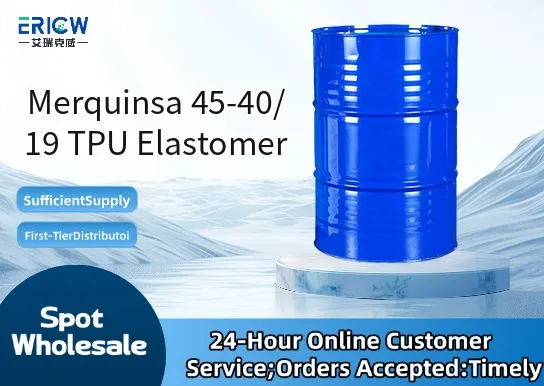
Excellent abrasion resistance for demanding mechanical service environments.
Good low-temperature flexibility down to –30 °C, maintaining elasticity in cold conditions.
High melt flow index enabling efficient processing via injection molding and extrusion.
Outstanding oil and grease resistance, suitable for contact with hydrocarbon-based fluids.
Hydrolysis-stabilized formulation ensuring long-term stability in humid or wet applications.
Automotive interior trim components including instrument panel skins and gear shift boots.
Industrial hoses and tubing requiring flexibility, pressure resistance, and chemical compatibility.
Consumer electronics protective casings and soft-touch overmolded grips.
Medical device tubing and non-implantable fluid-handling components compliant with ISO 10993-5.
Footwear midsoles and outsoles where rebound resilience and wear performance are critical.
| Chemical Type | Thermoplastic Polyurethane (TPU), polyester-based |
| Product Form | Pellets |
| Appearance | Off-white to light beige, free-flowing granules |
| Primary Applications | Injection molding, extrusion, blow molding |
| Key Features | Abrasion resistance, oil resistance, hydrolytic stability |
| Processing Temperature Range | 180–220 °C (recommended barrel temperature) |
| Density (ASTM D792) | 1.18–1.20 g/cm³ |
| Melt Flow Index (ISO 1133, 220 °C/10 kg) | 18–22 g/10 min |
Q1: What is the primary application domain for Merquinsa 45-40/19?
A: Merquinsa 45-40/19 is a thermoplastic polyurethane elastomer specifically engineered for demanding extrusion and injection molding applications, with strong suitability in flexible packaging films, medical tubing, and high-performance technical profiles requiring excellent melt stability and low-temperature flexibility.
Q2: How does Merquinsa 45-40/19 differ from standard aromatic TPU grades?
A: Unlike conventional aromatic TPUs, Merquinsa 45-40/19 features a tailored soft-segment architecture that delivers enhanced hydrolytic stability and reduced yellowing tendency under thermal processing—making it particularly suitable for applications where long-term clarity or color retention is critical.
Q3: Is Merquinsa 45-40/19 compatible with common polymer blending systems?
A: Yes—it demonstrates good compatibility with polyolefins (e.g., PP, PE) and certain engineering thermoplastics when used as a compatibilizer or impact modifier, though optimal dispersion typically requires careful attention to melt temperature profile and shear history during compounding.
Q4: What processing guidance should be followed for optimal performance?
A: For best results, process Merquinsa 45-40/19 using moderate barrel temperatures (typically 170–210 °C), avoid prolonged residence time at peak temperatures, and ensure thorough drying (<0.05% moisture) prior to processing to prevent surface defects and maintain mechanical integrity.
Contact With Us:
E-mail: wangxingqiang@ericwchem.com
Have a Questions? Call Us:
Add:
Building A1, Jiete Industrial Park, Huangpu District, Guangzhou City, Guangdong Province, China