English
 Español
 tiếng việt
 русский
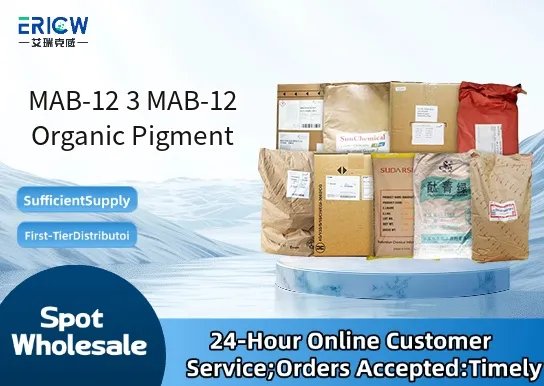
High color strength with excellent batch-to-batch consistency.
Good thermal stability up to 220°C for demanding processing conditions.
Outstanding lightfastness (Grade 7–8 per ISO 105-B02) in polymer applications.
Low volatility and minimal migration in PVC and polyolefin compounds.
Environmentally compliant — free of heavy metals and REACH-compliant.
PVC profiles and window frames.
Polyolefin fibers and injection-molded automotive interior parts.
Masterbatch formulations for packaging films.
Engineering thermoplastics including ABS and PS.
Coating systems requiring high chroma and weather resistance.
| Chemical Type | Azo pigment, disazo subclass |
| Product Form | Fine powder |
| Appearance | Reddish-brown free-flowing powder |
| Primary Applications | PVC, polyolefins, ABS, PS, coatings |
| Key Features | High opacity, good dispersibility, low dust generation |
| Benefits | Enhanced color yield, reduced dosage, improved process efficiency |
| Storage Conditions | Store in cool, dry place below 30°C; protect from moisture and direct sunlight |
| Regulatory Status | REACH registered; compliant with EU Directive 2002/72/EC for food-contact plastics (subject to specific migration limits) |
Q1: What is the primary chemical class of MAB-12 3 MAB-12 Organic Pigment?
A: MAB-12 3 MAB-12 is a high-performance quinacridone-based organic pigment, known for its excellent lightfastness, thermal stability, and strong reddish-violet hue.
Q2: Is MAB-12 3 MAB-12 suitable for use in food-contact plastics?
A: This pigment is not pre-approved for direct food-contact applications under major global regulatory frameworks. Customers must conduct full regulatory due diligence—including migration testing and compliance verification—based on their specific polymer matrix, processing conditions, and end-use requirements.
Q3: How does MAB-12 3 MAB-12 perform under high-temperature processing conditions?
A: It demonstrates good thermal stability and is routinely processed in engineering thermoplastics such as polyesters and polyamides at temperatures up to 280 °C without significant hue shift or decomposition, provided residence time is controlled.
Q4: What dispersion methods are recommended for optimal color development in polymer systems?
A: For best results, pre-dispersion using high-shear compounding—such as twin-screw extrusion with optimized screw configuration and melt temperature profile—is strongly recommended. Millbase dilution or masterbatch dilution may also be used depending on the host resin polarity and viscosity.
Q5: Can MAB-12 3 MAB-12 be used alongside other organic pigments or additives without compatibility issues?
A: It exhibits good compatibility with common organic pigments and most non-reactive polymer additives; however, interactions with certain acidic or strongly alkaline additives—especially in aqueous systems—may affect dispersion stability and should be evaluated case by case.
Contact With Us:
E-mail: wangxingqiang@ericwchem.com
Have a Questions? Call Us:
Add:
Building A1, Jiete Industrial Park, Huangpu District, Guangzhou City, Guangdong Province, China