English
 Español
 tiếng việt
 русский
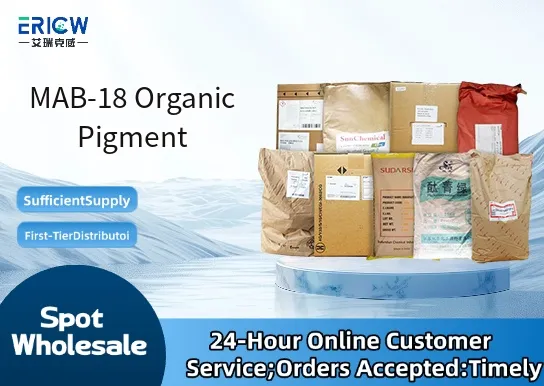
High chromatic strength with excellent color purity in red-orange shade.
Outstanding thermal stability up to 220°C, suitable for high-temperature processing.
Good dispersibility in both polar and non-polar polymer matrices.
Low migration tendency, ensuring color fastness in PVC and polyolefin applications.
Compliant with major global regulatory frameworks including REACH and RoHS.
PVC profiles and window frames requiring long-term weather resistance.
Injection-molded polypropylene (PP) automotive interior components.
Masterbatch formulations for food-contact-approved packaging films.
Coating systems for industrial metal and plastic substrates.
Textile printing pastes for synthetic fibers under low-cure conditions.
| Chemical Type | Azo pigment (disazo condensation type) |
| Product Form | Fine free-flowing powder |
| Appearance | Red-orange powder with uniform particle size distribution |
| Primary Applications | Polymer coloring, coatings, inks |
| Key Features | Thermal stability, lightfastness (ISO 105-B02: Grade 6–7), solvent resistance |
| Benefits | Consistent batch-to-batch performance, low dust generation, easy incorporation |
| Particle Size (D50) | 0.15–0.25 μm (by laser diffraction) |
| pH Value (5% aqueous suspension) | 6.5–7.5 |
Q1: What are the primary application areas for MAB-18 Organic Pigment?
A: MAB-18 is widely used in high-performance industrial coatings, automotive refinish systems, and engineering plastics where excellent chroma, thermal stability, and lightfastness are required. It is also suitable for selected ink formulations demanding good dispersion and color strength.
Q2: How should MAB-18 be dispersed in polymer systems?
A: Optimal dispersion is achieved using high-shear mixing or extrusion compounding. Pre-treatment with compatible dispersants or surface modifiers is recommended to enhance pigment wetting and minimize agglomeration—especially in non-polar resins such as polyolefins and styrenics.
Q3: Is MAB-18 suitable for food-contact applications?
A: MAB-18 is not certified for direct food-contact use. It is intended for industrial and decorative applications only. Customers requiring food-safe pigments should consult our regulatory team for alternative, compliant options.
Q4: What is the typical dosage range for MAB-18 in coating formulations?
A: Dosage depends on the desired shade intensity and substrate opacity, but MAB-18 is typically used at low concentrations—generally ranging from 0.1% to 2% by weight in the final formulation—to achieve strong coloration without compromising film integrity.
Contact With Us:
E-mail: wangxingqiang@ericwchem.com
Have a Questions? Call Us:
Add:
Building A1, Jiete Industrial Park, Huangpu District, Guangzhou City, Guangdong Province, China