English
 Español
 tiếng việt
 русский
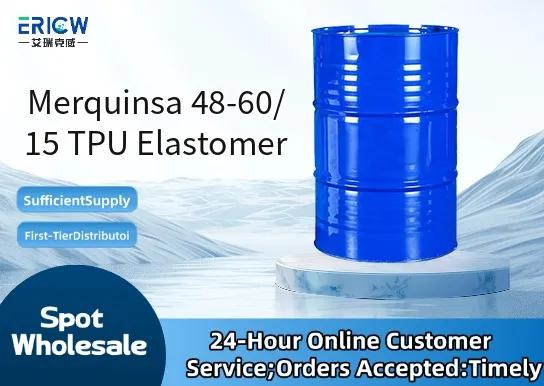
Excellent melt processability for injection molding and extrusion
Balanced hardness (Shore A 48–60) with high elasticity and resilience
Good resistance to oils, greases, and non-polar solvents
Low-temperature flexibility down to –40 °C
Hydrolysis-stabilized formulation for enhanced long-term durability
Automotive interior trim components (e.g., instrument panel skins, door inserts)
Industrial seals and gaskets requiring dynamic compression set resistance
Flexible hoses and tubing for pneumatic and low-pressure fluid transfer
Consumer electronics protective casings and soft-touch overmolding
Footwear midsoles and outsole compounds demanding abrasion resistance
| Chemical Type | Aliphatic polyester-based thermoplastic polyurethane |
| Product Form | Pellets (free-flowing, uniform size) |
| Appearance | Off-white to light beige translucent granules |
| Hardness (Shore A) | 48–60 (ASTM D2240) |
| Melt Flow Index (2.16 kg, 210 °C) | 12–16 g/10 min |
| Density | 1.18–1.20 g/cm³ (ISO 1183) |
| Primary Applications | Overmolding, flexible profiles, dynamic sealing |
| Key Features | Process stability, low compression set, hydrolysis resistance |
Q1: What is the primary application domain for Merquinsa 48-60/15?
A: Merquinsa 48-60/15 is a thermoplastic polyurethane (TPU) elastomer specifically engineered for demanding extrusion and calendering processes, commonly used in high-performance flexible films, coated textiles, and technical laminates requiring excellent melt stability and surface clarity.
Q2: How does Merquinsa 48-60/15 differ from standard aromatic TPUs in processing behavior?
A: Unlike many conventional aromatic TPUs, Merquinsa 48-60/15 offers enhanced thermal stability during melt processing—reducing yellowing and gel formation—while maintaining good die swell control and low melt viscosity, making it especially suitable for thin-gauge film production and multi-layer coextrusion.
Q3: Is Merquinsa 48-60/15 compatible with common plasticizers or polymer blends?
A: Yes—it demonstrates good compatibility with select non-migrating plasticizers and is frequently blended with other thermoplastic polymers such as PVC and certain polyesters to modify flexibility, adhesion, or surface properties; however, compatibility should always be verified experimentally for each specific formulation.
Q4: What are the recommended drying conditions prior to processing?
A: To ensure optimal melt quality and mechanical performance, drying at 70–80 °C for 3–4 hours under dehumidified conditions is generally recommended—though actual requirements may vary depending on ambient humidity, material history, and equipment configuration.
Contact With Us:
E-mail: wangxingqiang@ericwchem.com
Have a Questions? Call Us:
Add:
Building A1, Jiete Industrial Park, Huangpu District, Guangzhou City, Guangdong Province, China