English
 Español
 tiếng việt
 русский
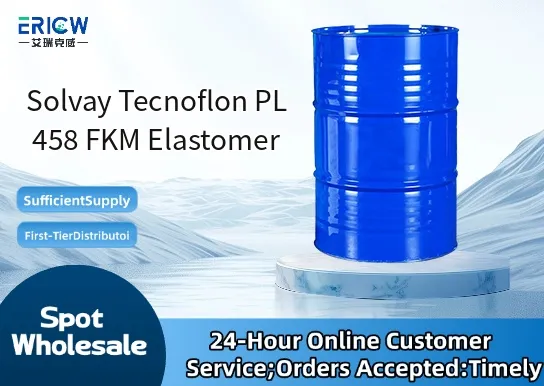
High fluorine content (≈68 wt%) for exceptional resistance to aggressive chemicals and hydrocarbons.
Optimized low-temperature flexibility with a glass transition temperature (Tg) of approximately −13 °C.
Excellent compression set resistance, maintaining seal integrity under prolonged thermal and mechanical stress.
Good processability in standard rubber mixing and molding equipment, including injection and compression molding.
Designed for demanding automotive and industrial sealing applications requiring long-term reliability.
Fuel system components including O-rings, gaskets, and diaphragms for gasoline, diesel, and biofuel exposure.
Under-hood engine seals such as valve cover gaskets, oil pan gaskets, and turbocharger hose couplings.
Chemical processing equipment seals exposed to aromatic solvents, acids, and high-temperature fluids.
Aerospace fluid system seals compliant with AMS and SAE standards for hydraulic and fuel handling.
Oil and gas downhole tool elastomers requiring stability in sour (H2S) and high-pressure environments.
| Chemical Type | Fluoroelastomer (FKM), vinylidene fluoride–hexafluoropropylene–tetrafluoroethylene terpolymer |
| Product Form | Uncured gum stock in bale form |
| Appearance | Light tan to beige, homogeneous solid |
| Primary Applications | Static and dynamic sealing in automotive, aerospace, and chemical processing |
| Key Features | High fluorine content, low-temperature flexibility, low compression set |
| Benefits | Extended service life in harsh chemical/thermal environments, reduced maintenance frequency |
| Processing Compatibility | Compatible with conventional sulfur-cure and bisphenol-cure systems |
| Standard Compliance | Meets ASTM D1418 classification: FKM; conforms to ISO 1629 designation: FPM |
Q1: What distinguishes Tecnoflon PL 458 from other FKM elastomers in the Tecnoflon portfolio?
A: Tecnoflon PL 458 is a low-viscosity, peroxide-curable fluoroelastomer specifically engineered for enhanced processability in high-precision molding and extrusion applications. Its optimized molecular structure delivers improved flow characteristics while maintaining the thermal stability, chemical resistance, and low compression set typical of high-performance FKMs.
Q2: Is Tecnoflon PL 458 suitable for applications requiring resistance to aggressive automotive fluids and elevated temperatures?
A: Yes — PL 458 is widely used in demanding under-hood sealing components due to its excellent resistance to modern engine oils, transmission fluids, coolants, and brake fluids, even at continuous service temperatures up to 200 °C. Its performance aligns with industry expectations for next-generation powertrain systems.
Q3: How does the peroxide cure system of PL 458 impact compound formulation and final part properties?
A: The peroxide-curable nature enables efficient crosslinking without acid acceptors, resulting in cleaner vulcanizates with superior heat aging resistance and lower extractables. Formulators typically combine it with co-agents such as triallyl isocyanurate (TAIC) to optimize crosslink density and mechanical retention after thermal exposure.
Q4: Can Tecnoflon PL 458 be blended with other fluoroelastomers or polymers to modify performance?
A: Yes — PL 458 is compatible with other Solvay Tecnoflon grades (e.g., standard bisphenol- or peroxide-curable FKMs) to tailor processing behavior, hardness, or chemical resistance profiles. Blending should be validated on a case-by-case basis to ensure homogeneous dispersion and predictable cure kinetics.
Contact With Us:
E-mail: wangxingqiang@ericwchem.com
Have a Questions? Call Us:
Add:
Building A1, Jiete Industrial Park, Huangpu District, Guangzhou City, Guangdong Province, China