English
 Español
 tiếng việt
 русский
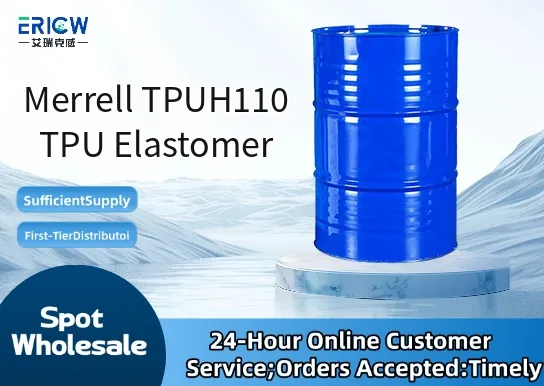
Excellent melt processability for extrusion, injection molding, and blow molding
Outstanding abrasion resistance and mechanical toughness
Good low-temperature flexibility down to –30 °C
Hydrolysis-resistant formulation suitable for humid or wet environments
High transparency and excellent clarity in thin-gauge applications
Medical tubing and fluid delivery systems
Automotive interior trim and soft-touch overlays
Wire and cable jacketing for flexible electronics
Consumer goods such as sportswear components and wearable device housings
Industrial seals and gaskets requiring dynamic compression set resistance
| Chemical Type | Aliphatic polyester-based thermoplastic polyurethane |
| Product Form | Pellets |
| Appearance | Translucent, off-white granules |
| Primary Applications | Extrusion, injection molding, blow molding |
| Key Features | Hydrolysis resistance, high clarity, low-temperature flexibility |
| Benefits | Reduced processing energy, excellent surface finish, long-term dimensional stability |
| Processing Temperature Range | 180–210 °C (melt) |
| Density (ASTM D792) | 1.18–1.20 g/cm³ |
Q1: What are the key processing advantages of Merrell TPUH110 compared to conventional TPU grades?
A: Merrell TPUH110 offers enhanced melt flow and reduced viscosity at standard extrusion and injection molding temperatures, enabling smoother processing in thin-wall or complex geometries. Its balanced thermal stability supports consistent output without premature degradation during extended runs.
Q2: Is Merrell TPUH110 suitable for applications requiring high abrasion resistance and flexibility at low temperatures?
A: Yes — as a polyester-based thermoplastic polyurethane elastomer, TPUH110 delivers excellent resistance to wear, tearing, and dynamic flexing, while retaining elasticity down to approximately −30 °C. Performance in extreme cold depends on part design and service conditions.
Q3: Can Merrell TPUH110 be blended with other polymers, and what compatibility considerations apply?
A: TPUH110 shows good miscibility with certain polyesters and compatible thermoplastic elastomers when properly dried and processed. However, blending with non-polar resins (e.g., PP or PE) typically requires compatibilizers or functionalized additives to achieve stable morphology and mechanical performance.
Q4: What drying conditions are recommended prior to processing Merrell TPUH110?
A: To prevent hydrolysis and surface defects, TPUH110 should be dried at 80–90 °C for 3–4 hours using desiccant-assisted air. Resin moisture content should be maintained below 0.05% before melt processing.
Contact With Us:
E-mail: wangxingqiang@ericwchem.com
Have a Questions? Call Us:
Add:
Building A1, Jiete Industrial Park, Huangpu District, Guangzhou City, Guangdong Province, China