English
 Español
 tiếng việt
 русский
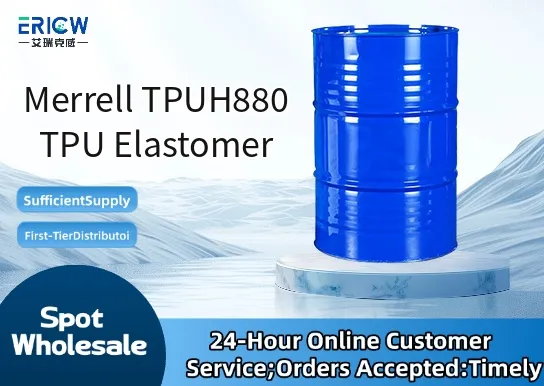
Excellent abrasion resistance for extended service life in demanding mechanical environments.
High tensile strength and elongation at break, enabling robust performance under dynamic loading.
Outstanding oil, grease, and hydrocarbon resistance—ideal for industrial fluid-contact applications.
Good low-temperature flexibility down to –30 °C without significant loss of elasticity.
Readily processable via injection molding, extrusion, and blow molding with consistent melt stability.
Industrial hoses and pneumatic tubing requiring high pressure and chemical resilience.
Roller covers and conveyor components exposed to abrasive wear and rolling fatigue.
Automotive air ducts, CVJ boots, and under-hood protective sleeves.
High-performance seals, gaskets, and dynamic O-rings in hydraulic systems.
Specialty footwear midsoles and outsoles where energy return and durability are critical.
| Chemical Type | Aliphatic polyester-based thermoplastic polyurethane |
| Product Form | Pellets (free-flowing, dry-blend ready) |
| Appearance | Off-white to light tan, translucent granules |
| Hardness (Shore A) | 88 ± 2 |
| Tensile Strength (ASTM D412) | ≥ 35 MPa |
| Elongation at Break (ASTM D412) | ≥ 500 % |
| Density (ASTM D792) | 1.18–1.20 g/cm³ |
| Melt Flow Index (230 °C/2.16 kg, ASTM D1238) | 10–14 g/10 min |
Q1: What are the key processing advantages of Merrell TPUH880 compared to conventional TPU grades?
A: Merrell TPUH880 offers enhanced melt flow and reduced viscosity during extrusion and injection molding, enabling smoother processing at lower temperatures and shorter cycle times. Its balanced hardness and elasticity support consistent part replication and reduced post-molding shrinkage.
Q2: Is Merrell TPUH880 suitable for applications requiring long-term resistance to hydrolysis and UV exposure?
A: Yes — Merrell TPUH880 is formulated with hydrolysis-stable polyester-ether hybrid chemistry and includes built-in UV stabilizers, delivering improved retention of mechanical properties under humid, warm, and outdoor-exposed conditions compared to standard polyester-based TPUs.
Q3: Can Merrell TPUH880 be blended or compounded with other polymers?
A: Merrell TPUH880 demonstrates good compatibility with common thermoplastic elastomers such as SEBS and certain polyolefins, and can be effectively compounded with fillers, pigments, and functional additives. Compatibility with polar resins like PET or PC should be verified through small-scale trials due to potential interfacial adhesion limitations.
Q4: What surface finish characteristics can be expected when using Merrell TPUH880 in injection-molded parts?
A: Parts molded from Merrell TPUH880 typically exhibit a naturally smooth, low-gloss surface with excellent demolding behavior. It accepts texturing well and supports high-fidelity replication of mold finishes — including matte, soft-touch, and fine-grain patterns — without requiring secondary coating.
Contact With Us:
E-mail: wangxingqiang@ericwchem.com
Have a Questions? Call Us:
Add:
Building A1, Jiete Industrial Park, Huangpu District, Guangzhou City, Guangdong Province, China