English
 Español
 tiếng việt
 русский
High thermal stability suitable for elevated processing temperatures.
Excellent chemical resistance to aliphatic hydrocarbons, alcohols, and weak acids.
Low moisture absorption ensuring dimensional stability in humid environments.
Good melt flow characteristics for consistent extrusion and injection molding.
Halogen-free formulation supporting compliance with RoHS and REACH directives.
Automotive under-hood components requiring heat and chemical resistance.
Electrical connectors and insulating housings in industrial control systems.
Fluid-handling parts in chemical processing equipment.
Medical device housings where biocompatibility and sterilization compatibility are essential.
Consumer electronics structural components demanding flame-retardant performance without halogens.
| Chemical Type | Polyphenylene Sulfide (PPS) – Reinforced with 40% glass fiber |
| Product Form | Pellets |
| Appearance | Off-white to light tan granules |
| Primary Applications | High-performance engineering thermoplastics for demanding industrial environments |
| Key Features | Thermally stable, chemically inert, dimensionally stable, halogen-free |
| Benefits | Reduced warpage, extended service life in corrosive conditions, recyclable process scrap |
| Processing Method | Injection molding, extrusion |
| Standards Compliance | UL94 V-0 (1.6 mm), ISO 10350-1, ASTM D638/D790 |
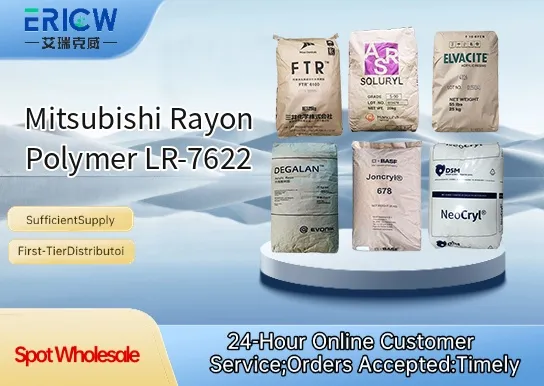
Q1: What is the primary function of LR-7622 in polymer formulations?
A: LR-7622 is a specialty acrylic-based polymer designed primarily as a rheology modifier and processing aid, offering controlled viscosity development and improved melt stability in thermoplastic systems.
Q2: Is LR-7622 compatible with common engineering thermoplastics?
A: Yes, LR-7622 demonstrates good compatibility with a range of engineering thermoplastics including polycarbonate (PC), polybutylene terephthalate (PBT), and polyamide (PA) blends, supporting uniform dispersion during compounding.
Q3: How is LR-7622 typically incorporated into a production process?
A: It is commonly introduced via dry blending with base resin prior to extrusion or injection molding, and may also be added directly during twin-screw compounding—typically used at low concentrations to optimize flow behavior without compromising mechanical properties.
Q4: Does LR-7622 require special handling or storage conditions?
A: LR-7622 should be stored in its original sealed packaging under cool, dry conditions away from direct sunlight and excessive humidity; no special protective equipment is required for standard handling, but general industrial hygiene practices are recommended.
Contact With Us:
E-mail: wangxingqiang@ericwchem.com
Have a Questions? Call Us:
Add:
Building A1, Jiete Industrial Park, Huangpu District, Guangzhou City, Guangdong Province, China