English
 Español
 tiếng việt
 русский
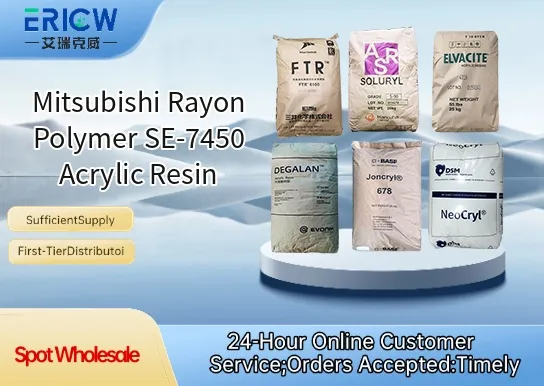
High transparency and excellent optical clarity for premium visual performance.
Outstanding weather resistance, including UV stability and long-term color retention.
Good compatibility with common solvent-based coating systems and crosslinkers.
Controlled molecular weight distribution for consistent film formation and leveling.
Low VOC formulation support capability, aligning with modern environmental compliance requirements.
Automotive clearcoats and topcoats requiring high gloss and durability.
Industrial maintenance coatings for metal and plastic substrates.
Architectural coatings, including exterior façade and cladding finishes.
Plastic coatings for consumer electronics housings and automotive interior trim.
Specialty decorative coatings for high-end furniture and appliances.
| Chemical Type | Solution polymerized acrylic resin |
| Product Form | Liquid, solvent-based solution |
| Appearance | Clear, colorless to pale yellow liquid |
| Solvent System | Typically xylene/toluene or mixed aromatic hydrocarbons |
| Non-Volatile Content (NV) | Approx. 50–55 wt% (as supplied) |
| Acid Value | 15–25 mg KOH/g |
| Hydroxyl Value | 60–80 mg KOH/g |
| Viscosity (25°C) | 1,200–2,000 mPa·s (Brookfield, spindle #3, 20 rpm) |
Q1: What is the primary function of SE-7450 in coating formulations?
A: SE-7450 is a specialty acrylic resin designed primarily as a rheology modifier and film-forming aid in water-based industrial and architectural coatings. It helps improve sag resistance, enhance leveling, and stabilize pigment dispersion without significantly increasing viscosity at low shear.
Q2: Is SE-7450 compatible with common co-binders such as styrene-acrylic or vinyl acetate copolymers?
A: Yes, SE-7450 demonstrates broad compatibility with a range of synthetic latexes and waterborne binders, including styrene-acrylic, pure acrylic, and vinyl-acrylic systems. Compatibility should be verified in final formulations due to sensitivity to pH, ionic strength, and surfactant package.
Q3: How should SE-7450 be incorporated into a water-based formulation?
A: SE-7450 is typically added during the let-down stage, after initial pigment grinding. It should be diluted with deionized water prior to addition and introduced under moderate agitation to ensure uniform distribution. Premixing with other water-soluble additives is generally acceptable.
Q4: Does SE-7450 contribute to final film properties such as hardness or gloss?
A: While not a primary film former, SE-7450 can positively influence film integrity, resulting in improved surface uniformity and moderate enhancement in gloss retention and early hardness development—particularly when used in conjunction with standard acrylic emulsions.
Q5: What storage conditions are recommended for optimal shelf life?
A: Store SE-7450 in its original sealed container at temperatures between 5 °C and 30 °C, away from direct sunlight and freezing conditions. Prolonged exposure to temperatures below 5 °C may cause reversible viscosity changes; allow to equilibrate to room temperature before use.
Contact With Us:
E-mail: wangxingqiang@ericwchem.com
Have a Questions? Call Us:
Add:
Building A1, Jiete Industrial Park, Huangpu District, Guangzhou City, Guangdong Province, China