English
 Español
 tiếng việt
 русский
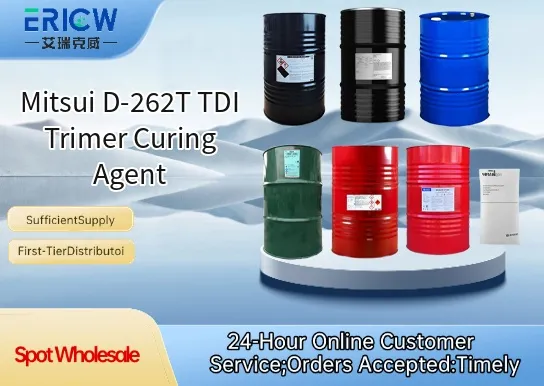
Highly stable aliphatic trimer structure ensures excellent storage stability and extended pot life.
Low volatility and reduced monomer content enhance workplace safety and compliance with industrial hygiene standards.
Delivers superior mechanical properties—including hardness, abrasion resistance, and chemical resistance—in cured polyurethane systems.
Compatible with a wide range of polyols (e.g., polyester, polyether) for flexible formulation design.
Enables fast ambient- or low-temperature curing without compromising film integrity or adhesion.
High-performance two-component polyurethane coatings for automotive OEM and refinish applications.
Durable floor coatings in industrial, commercial, and healthcare facilities.
Protective coatings for metal substrates exposed to harsh chemical or outdoor environments.
Clear topcoats and pigmented finishes requiring gloss retention and UV stability.
Adhesives and sealants requiring rapid build-up of cohesive strength and low-temperature flexibility.
| Chemical Type | TDI-based isocyanurate trimer |
| Product Form | Liquid |
| Appearance | Colorless to pale yellow transparent liquid |
| NCO Content (wt%) | 15.0–16.5 |
| Viscosity at 25°C (mPa·s) | 800–1,200 |
| Specific Gravity (25°C) | 1.20–1.24 |
| Flash Point (PMCC, °C) | 190–200 |
| Storage Stability (unopened, 25°C) | ≥12 months |
Q1: What is the primary chemical nature and functionality of Mitsui D-262T?
A: Mitsui D-262T is a trifunctional aromatic isocyanurate-based curing agent derived from toluene diisocyanate (TDI), offering enhanced thermal stability and reduced volatility compared to monomeric TDI. Its trimeric structure provides controlled reactivity and improved crosslink density in polyurethane systems.
Q2: How does D-262T differ from other TDI-based trimers or HDI-based curing agents?
A: Unlike aliphatic HDI trimers, D-262T retains aromatic character, delivering higher rigidity, improved chemical resistance, and faster ambient- or low-temperature cure profiles—making it especially suitable for industrial coatings and elastomers where hardness and solvent resistance are prioritized over UV stability.
Q3: What types of resins or prepolymers is D-262T typically compatible with?
A: D-262T is widely used with hydroxyl-terminated polyesters, polyethers, acrylics, and caprolactone polyols. It performs well in both solventborne and high-solids formulations, though compatibility and pot life should be verified experimentally for each specific resin system and catalyst package.
Q4: How should D-262T be handled and stored to maintain performance?
A: Store in tightly sealed containers under dry, cool conditions (below 30°C) and protect from moisture, heat, and direct sunlight. Prolonged exposure to humidity may cause surface haze or gelation due to reaction with ambient water vapor; always use dry handling equipment and nitrogen blanketing when practical.
Contact With Us:
E-mail: wangxingqiang@ericwchem.com
Have a Questions? Call Us:
Add:
Building A1, Jiete Industrial Park, Huangpu District, Guangzhou City, Guangdong Province, China