English
 Español
 tiếng việt
 русский
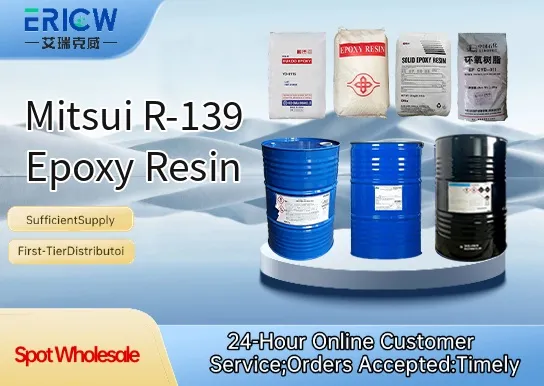
High-purity bisphenol-A based liquid epoxy resin with low chloride content.
Excellent compatibility with standard amine and anhydride curing agents.
Low viscosity enables easy handling, mixing, and processing in casting and impregnation applications.
Superior electrical insulation properties and thermal stability after curing.
Consistent batch-to-batch performance meeting stringent JIS K 6911 and ASTM D1656 specifications.
Electrical encapsulation of transformers, reactors, and high-voltage insulators.
Impregnation of dry-type motor and generator windings.
Structural laminates for printed circuit board (PCB) substrates and prepregs.
Casting resins for medium-voltage switchgear components and bushings.
Adhesive formulations requiring high dielectric strength and moisture resistance.
| Chemical Type | Bisphenol-A diglycidyl ether (DGEBA) |
| Product Form | Clear, pale yellow liquid |
| Appearance | Transparent, slightly viscous liquid at 25°C |
| Epoxy Equivalent Weight (EEW) | 187–193 g/eq |
| Viscosity (25°C) | 12,000–15,000 mPa·s |
| Chloride Content | ≤ 800 ppm |
| Softening Point | Not applicable (liquid at room temperature) |
| Primary Applications | Electrical insulation, casting, impregnation, laminates |
Q1: What is the primary functional role of Mitsui R-139 in epoxy formulations?
A: Mitsui R-139 is a reactive diluent designed to reduce viscosity and improve processability of standard bisphenol-A or bisphenol-F based epoxy resins without significantly compromising final crosslink density or thermal performance.
Q2: Is Mitsui R-139 suitable for high-gloss, low-VOC coatings applications?
A: Yes — its low volatility and reactivity make it well-suited for high-solids and low-VOC coating systems where reduced shrinkage, improved flow, and enhanced adhesion are required.
Q3: How does Mitsui R-139 compare to non-reactive diluents in terms of film properties?
A: Unlike non-reactive diluents, Mitsui R-139 becomes chemically incorporated into the polymer network during cure, helping retain mechanical strength, chemical resistance, and glass transition temperature in the final film.
Q4: Can Mitsui R-139 be used in combination with common amine or anhydride hardeners?
A: Yes — it demonstrates good compatibility with standard aliphatic and cycloaliphatic amines, as well as aromatic amines and anhydrides, and typically requires no special handling adjustments when blended into conventional epoxy-hardener systems.
Contact With Us:
E-mail: wangxingqiang@ericwchem.com
Have a Questions? Call Us:
Add:
Building A1, Jiete Industrial Park, Huangpu District, Guangzhou City, Guangdong Province, China