English
 Español
 tiếng việt
 русский
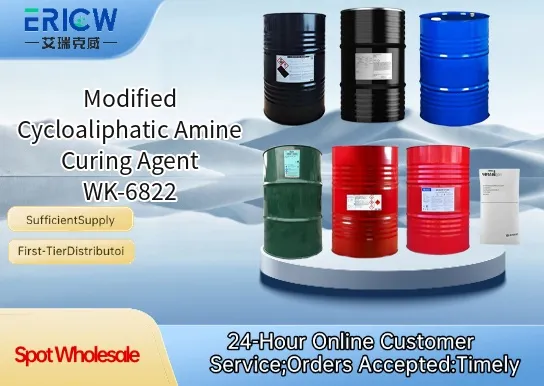
Enhanced pot life compared to standard aliphatic amines, enabling extended processing window for large-scale casting and laminating operations.
Improved thermal and chemical resistance in cured epoxy systems, particularly against weak acids and solvents at elevated temperatures.
Low viscosity and excellent compatibility with bisphenol-A and novolac epoxy resins without requiring co-solvents.
Reduced exotherm during cure, minimizing internal stress and improving dimensional stability in thick-section parts.
Lower volatility and amine odor versus conventional DETA or TETA derivatives, supporting safer handling in enclosed environments.
High-performance electrical insulation encapsulants for power transformers and high-voltage switchgear.
Structural adhesives in wind turbine blade assembly and aerospace composite bonding.
Chemical-resistant flooring and tank linings for industrial wastewater treatment facilities.
Casting resins for precision electrical components requiring low dielectric loss and high arc resistance.
Tooling and mold-making compounds where dimensional accuracy and heat resistance are critical.
| Chemical Type | Modified cycloaliphatic amine |
| Product Form | Liquid |
| Appearance | Clear, pale yellow liquid |
| Primary Applications | Epoxy resin curing agent for high-performance composites and coatings |
| Key Features | Extended pot life, low exotherm, improved thermal stability |
| Benefits | Enhanced safety profile, superior mechanical properties in cured network |
| Storage Stability | 12 months in original sealed container at 20–25°C |
| Compatibility | Compatible with standard diglycidyl ether of bisphenol-A (DGEBA) and multifunctional epoxy resins |
Q1: What are the key advantages of WK-6822 compared to conventional aliphatic or aromatic amine curing agents?
A: WK-6822 offers an optimized balance of low volatility, reduced skin sensitization potential, and improved compatibility with epoxy resins—particularly in high-performance coatings and adhesives where extended pot life and controlled reactivity are required. Its modified cycloaliphatic structure contributes to enhanced thermal stability and lower exotherm versus standard aliphatic amines, while avoiding the toxicity and UV-yellowing concerns associated with aromatic systems.
Q2: Is WK-6822 suitable for ambient-cure epoxy formulations?
A: Yes, WK-6822 is specifically designed for ambient- and low-temperature-cure applications. It provides reliable reactivity at room temperature while maintaining sufficient pot life for industrial processing—especially in maintenance coatings, flooring systems, and repair composites where forced heating is impractical.
Q3: How does WK-6822 affect the mechanical properties of cured epoxy networks?
A: When properly formulated, WK-6822 supports the development of tough, rigid networks with good impact resistance and dimensional stability. Its molecular architecture promotes efficient crosslinking density without excessive brittleness, resulting in balanced tensile strength, flexural modulus, and interfacial adhesion—particularly beneficial in structural bonding and protective coating applications.
Q4: Can WK-6822 be used in food-contact or potable water applications?
A: WK-6822 is not pre-qualified for direct food-contact or potable water applications. Formulators intending such use must conduct full regulatory evaluation—including extractables testing and compliance verification against applicable regional requirements—as final approval depends on the complete cured system composition, processing conditions, and end-use exposure scenario.
Contact With Us:
E-mail: wangxingqiang@ericwchem.com
Have a Questions? Call Us:
Add:
Building A1, Jiete Industrial Park, Huangpu District, Guangzhou City, Guangdong Province, China