English
 Español
 tiếng việt
 русский
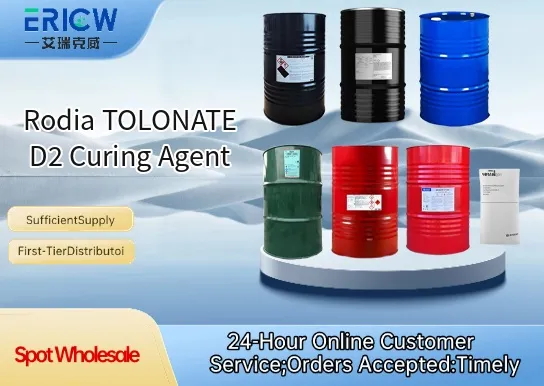
Low-viscosity aliphatic polyisocyanate curing agent based on hexamethylene diisocyanate (HDI) trimer chemistry.
Excellent weather resistance and UV stability, enabling long-term gloss and color retention in outdoor applications.
Compatible with a wide range of hydroxyl-functional acrylic, polyester, and polyol resins.
Provides fast ambient- and forced-dry cure profiles without requiring high-temperature baking.
Non-yellowing performance ideal for clearcoats and white/light-colored topcoats.
Automotive refinish clearcoats and basecoats.
Industrial maintenance coatings for metal and plastic substrates.
High-performance wood finishes including furniture and cabinetry coatings.
General-purpose protective coatings for architectural and agricultural equipment.
Two-component (2K) polyurethane topcoats for demanding OEM and aftermarket applications.
| Chemical Type | Aliphatic HDI-based polyisocyanate (trimer) |
| Product Form | Liquid |
| Appearance | Clear, colorless to pale yellow liquid |
| NCO Content (wt%) | 15.5–16.5% |
| Viscosity at 25°C (mPa·s) | 800–1,200 |
| Specific Gravity (25°C) | 1.18–1.22 |
| Solvent Content | Acetate-based (e.g., butyl acetate), <5% VOC |
| Storage Stability | 12 months unopened at 15–25°C |
Q1: What is the primary chemical nature of TOLONATE D2?
A: TOLONATE D2 is an aliphatic isocyanurate-based polyisocyanate, derived from hexamethylene diisocyanate (HDI), offering excellent weather resistance, low viscosity, and good compatibility with common hydroxyl-functional resins.
Q2: Is TOLONATE D2 suitable for coatings requiring FDA or food-contact compliance?
A: TOLONATE D2 is not inherently approved for direct food-contact applications. Its use in food-contact coatings requires full formulation evaluation—including final cured film testing—by qualified regulatory experts, as compliance depends on the entire system, processing conditions, and intended end-use.
Q3: How does TOLONATE D2 compare to standard HDI biuret curing agents in terms of reactivity and film properties?
A: TOLONATE D2 exhibits slightly lower initial reactivity than HDI biuret due to its trimeric isocyanurate structure, which supports extended pot life and improved handling. It delivers superior UV stability, hardness development, and chemical resistance in the cured film compared to many conventional HDI-based hardeners.
Q4: What types of resins is TOLONATE D2 typically formulated with?
A: TOLONATE D2 is widely compatible with hydroxyl-functional acrylics, polyesters, and alkyds. It is especially favored in high-performance industrial and automotive refinish coatings where gloss retention, flexibility, and durability are critical.
Q5: What is the typical dosage range for TOLONATE D2 in a two-component coating system?
A: Dosage is formulation-dependent and must be optimized based on resin functionality and target NCO:OH ratio. In most standard systems, TOLONATE D2 is used at low concentrations—generally ranging from 0.1% to 2% by weight relative to total resin solids—to achieve full crosslinking without compromising viscosity or film clarity.
Contact With Us:
E-mail: wangxingqiang@ericwchem.com
Have a Questions? Call Us:
Add:
Building A1, Jiete Industrial Park, Huangpu District, Guangzhou City, Guangdong Province, China