English
 Español
 tiếng việt
 русский
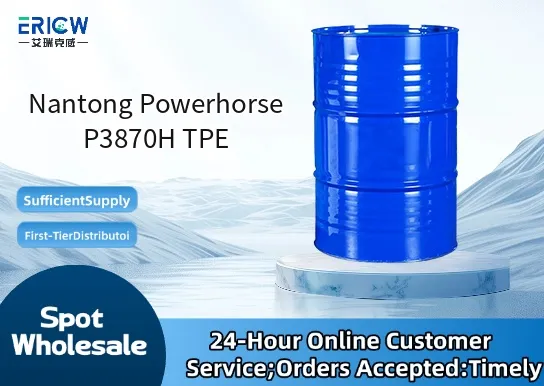
Excellent elasticity and recovery performance at room temperature.
Good processability on standard thermoplastic injection molding and extrusion equipment.
Enhanced soft-touch feel with low surface tack and consistent texture.
Compatible with polypropylene (PP) and polyethylene (PE) for co-molding applications.
RoHS-compliant formulation with no added phthalates or heavy metals.
Overmolded grips for power tools and hand-held appliances.
Soft-touch automotive interior components including trim bezels and control knobs.
Consumer electronics casings and protective covers requiring impact absorption.
Medical device housings and non-invasive wearable interface elements.
Sealing rings and gasketing solutions in industrial fluid handling systems.
| Chemical Type | Thermoplastic Elastomer (TPE), SEBS-based |
| Product Form | Pellets |
| Appearance | Translucent, light amber granules |
| Hardness (Shore A) | 70 ± 3 |
| Density (g/cm³) | 0.92–0.94 |
| Melt Flow Rate (190°C/5 kg) | 12–16 g/10 min |
| Service Temperature Range | −40°C to +70°C |
| Key Features | Soft-touch surface, PP/PE adhesion, recyclable |
Q1: What is the primary application profile of P3870H TPE?
A: P3870H is a thermoplastic elastomer formulated for soft-touch overmolding and flexible component production, especially in consumer electronics, automotive interior trim, and hand tools where resilience, grip performance, and processability on standard injection molding equipment are required.
Q2: Is P3870H compatible with common engineering thermoplastics for two-shot molding?
A: Yes — P3870H exhibits strong adhesion to polypropylene (PP), polyethylene (PE), and ABS substrates without requiring primers or surface treatment under standard processing conditions, making it well-suited for multi-material injection molding applications.
Q3: What are the key processing recommendations for optimal part quality?
A: P3870H processes efficiently on conventional injection molding machines. Recommended melt temperature range is typically 180–210 °C, with mold temperatures between 20–40 °C. Drying is generally not required unless material has been exposed to high humidity for extended periods; if needed, mild drying at 60–70 °C for 2–4 hours is sufficient.
Q4: How does P3870H perform in terms of UV resistance and long-term aging?
A: P3870H contains stabilizers that provide moderate resistance to UV exposure and thermal oxidation. For outdoor or extended service life applications, supplemental UV stabilizers or protective coatings are recommended to maintain surface integrity and mechanical performance over time.
Contact With Us:
E-mail: wangxingqiang@ericwchem.com
Have a Questions? Call Us:
Add:
Building A1, Jiete Industrial Park, Huangpu District, Guangzhou City, Guangdong Province, China