English
 Español
 tiếng việt
 русский
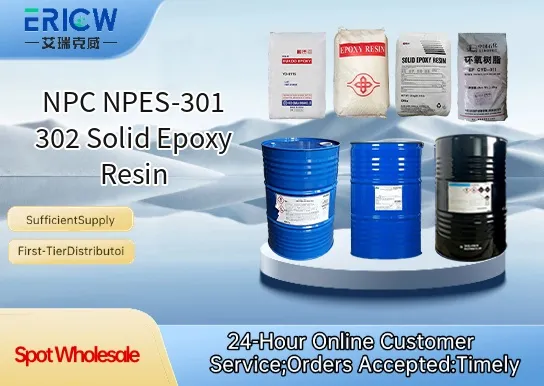
High-purity bisphenol-A based solid epoxy resin with consistent molecular weight distribution.
Excellent thermal stability and low volatile organic compound (VOC) content for safer processing.
Optimized melt viscosity for improved flow and wetting in powder coating and casting applications.
Superior adhesion to metals, composites, and cured thermoset substrates.
Compatible with standard amine and anhydride hardeners for broad formulation flexibility.
Powder coatings for architectural aluminum, appliances, and automotive components.
Electrical encapsulation and potting compounds for transformers, sensors, and PCBs.
High-performance composite matrices in wind turbine blades and aerospace structural parts.
Adhesives and structural bonding films for metal-to-metal and metal-to-composite joints.
| Chemical Type | Bisphenol-A based solid epoxy resin |
| Product Form | Off-white to light tan granular solid |
| Appearance | Free-flowing granules, no visible impurities |
| Epoxy Equivalent Weight (EEW) | 470–490 g/eq |
| Melt Viscosity (150°C) | 8,000–12,000 cP |
| Glass Transition Temperature (Tg) | 65–72°C (DSC, 10°C/min) |
| Volatile Content (120°C, 2 hrs) | ≤0.3 wt% |
| Softening Point (Ring & Ball) | 82–87°C |
Q1: What is the primary functional role of NPC NPES-301/302 in epoxy formulations?
A: NPC NPES-301 and NPES-302 are solid epoxy resins designed to serve as reactive binders and matrix formers in thermosetting systems. They provide structural integrity, chemical resistance, and adhesion upon curing with appropriate hardeners—commonly used in powder coatings, electrical encapsulants, and composite matrices.
Q2: How do NPES-301 and NPES-302 differ from each other?
A: NPES-301 and NPES-302 share the same base epoxy chemistry but differ in molecular weight distribution and melt viscosity. NPES-301 typically offers slightly lower softening point and enhanced flow characteristics, while NPES-302 provides marginally higher rigidity and thermal stability post-cure—making selection dependent on processing method and end-use performance priorities.
Q3: Which types of hardeners are commonly compatible with these resins?
A: These solid epoxy resins exhibit good reactivity with a range of amine-based hardeners (e.g., dicyandiamide, aromatic diamines) and anhydride systems. Compatibility and cure profile should be verified experimentally, as optimal stoichiometry and thermal schedule depend on specific formulation goals such as pot life, gel time, and final crosslink density.
Q4: Are NPC NPES-301 and NPES-302 suitable for food-contact or pharmaceutical applications?
A: While these resins are manufactured under controlled conditions, they are not pre-qualified for direct food-contact or pharmaceutical use without further regulatory evaluation. Formulators must conduct full compliance testing—including extraction studies and toxicological assessment—aligned with applicable regional requirements before deployment in such sensitive applications.
Contact With Us:
E-mail: wangxingqiang@ericwchem.com
Have a Questions? Call Us:
Add:
Building A1, Jiete Industrial Park, Huangpu District, Guangzhou City, Guangdong Province, China