English
 Español
 tiếng việt
 русский
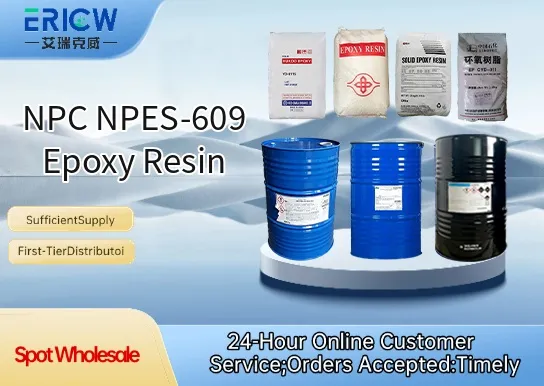
High reactivity with amine and anhydride curing agents for rapid gelation and short cycle times.
Excellent adhesion to metals, composites, and treated plastics under ambient and elevated temperature conditions.
Low viscosity (12,000–15,000 cP at 25°C) enabling easy processing, impregnation, and air release.
Superior electrical insulation properties with high dielectric strength and volume resistivity.
Good chemical resistance to dilute acids, alkalis, and aliphatic solvents after full cure.
Electrical encapsulation of transformers, reactors, and high-voltage insulators.
Structural adhesive formulations for aerospace composite bonding and automotive lightweight assemblies.
Matrix resin for filament-wound pressure vessels and fiber-reinforced polymer (FRP) tanks.
Potting compound for power electronics, PCB modules, and LED driver housings.
Tooling resin for low-temperature mold making and precision casting patterns.
| Chemical Type | Diglycidyl ether of bisphenol-A (DGEBA) |
| Product Form | Clear to pale yellow viscous liquid |
| Appearance | Homogeneous, transparent, free from gels or sediment |
| Epoxy Equivalent Weight (EEW) | 185–195 g/eq |
| Viscosity (25°C) | 12,000–15,000 cP |
| Chloride Content | ≤ 700 ppm |
| Softening Point | 12–16°C |
| Storage Stability | 12 months at ≤ 25°C in sealed original container |
Q1: What is the primary functional role of NPC NPES-609 in epoxy formulations?
A: NPC NPES-609 functions as a reactive diluent and viscosity modifier, enabling improved processability while maintaining crosslink density and thermal stability in cured epoxy systems.
Q2: Is NPC NPES-609 compatible with standard amine and anhydride curing agents?
A: Yes, NPC NPES-609 demonstrates broad compatibility with common aliphatic and aromatic amines, as well as cyclic anhydrides, supporting flexible formulation design across coating, adhesive, and encapsulation applications.
Q3: How does NPC NPES-609 influence pot life and gel time compared to conventional bisphenol-A epoxy resins?
A: Due to its lower viscosity and modified reactivity profile, NPC NPES-609 typically extends working time relative to high-molecular-weight epoxies—especially at ambient or moderately elevated temperatures—without significantly compromising final cure performance.
Q4: Can NPC NPES-609 be used in applications requiring low volatile organic compound (VOC) content?
A: Yes, NPC NPES-609 is a low-volatility, non-solvented liquid resin, making it suitable for formulating low-VOC and solvent-free epoxy systems compliant with evolving environmental and occupational health requirements.
Contact With Us:
E-mail: wangxingqiang@ericwchem.com
Have a Questions? Call Us:
Add:
Building A1, Jiete Industrial Park, Huangpu District, Guangzhou City, Guangdong Province, China