English
 Español
 tiếng việt
 русский
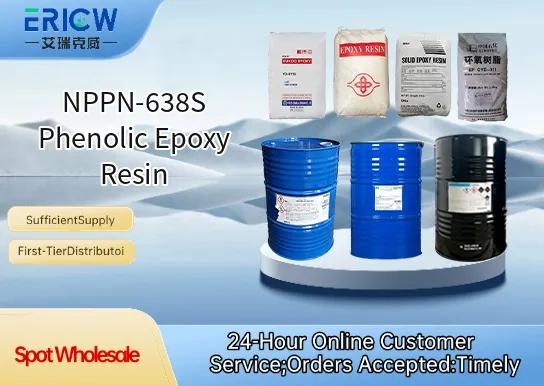
High thermal stability with excellent resistance to continuous service temperatures up to 180 °C.
Superior chemical resistance to strong acids, alkalis, and organic solvents in cured form.
Enhanced adhesion to metal substrates including aluminum, copper, and stainless steel.
Low viscosity at elevated processing temperatures, enabling easy impregnation and coating application.
Halogen-free formulation compliant with RoHS and REACH regulatory requirements.
Electrical insulation systems for high-voltage motors and generators.
Encapsulation and potting compounds for power electronics modules.
Structural adhesives in aerospace composite bonding assemblies.
High-performance coatings for corrosion protection of oil & gas infrastructure.
Matrix resin for carbon fiber reinforced laminates used in demanding industrial tooling.
| Chemical Type | Phenolic-modified epoxy resin (novolac-based) |
| Product Form | Off-white to light amber solid pellets |
| Appearance | Free-flowing granular solid at room temperature |
| Softening Point | 85–92 °C (ASTM E28) |
| Epoxy Equivalent Weight (EEW) | 185–195 g/eq (ASTM D1652) |
| Volatiles Content | ≤ 0.5 wt% (120 °C, 2 h, ASTM D2247) |
| Storage Stability | Stable for ≥12 months at 25 °C in sealed containers |
| Primary Applications | High-temp electrical insulation, structural composites, corrosion-resistant coatings |
Q1: What distinguishes NPPN-638S from standard bisphenol-A epoxy resins?
A: NPPN-638S is a phenolic novolac-based epoxy resin, offering significantly higher functionality and thermal stability compared to conventional bisphenol-A epoxies. Its multi-epoxy structure enables enhanced crosslink density, resulting in superior chemical resistance, hardness, and performance at elevated temperatures.
Q2: In which types of high-performance coatings is NPPN-638S most commonly applied?
A: It is widely used in industrial maintenance coatings, heavy-duty tank linings, and corrosion-resistant systems for aggressive environments—especially where exposure to acids, solvents, or elevated service temperatures is expected. Its compatibility with amine and phenolic hardeners makes it suitable for both ambient-cure and thermal-cure formulations.
Q3: How does NPPN-638S contribute to adhesion and film integrity on metal substrates?
A: The resin’s polar aromatic backbone and high epoxy functionality promote strong interfacial interactions with metal surfaces, improving wetting and enhancing cohesive strength within the cured film. When properly formulated, it delivers excellent intercoat adhesion and resistance to blistering under humid or thermal cycling conditions.
Q4: Is NPPN-638S compatible with common epoxy curing agents?
A: Yes—it reacts efficiently with a broad range of curing agents, including aromatic amines (e.g., DDM, DDS), dicyandiamide (DICY), and phenolic novolacs. Cure kinetics and final properties depend on the selected hardener, stoichiometry, and thermal profile, so formulation optimization is recommended for each application.
Q5: What handling precautions should be observed when working with NPPN-638S?
A: As with most epoxy resins, appropriate personal protective equipment—including nitrile gloves, safety goggles, and adequate ventilation—is recommended during handling and processing. Avoid prolonged skin contact and inhalation of mists or vapors generated during heating or mixing.
Contact With Us:
E-mail: wangxingqiang@ericwchem.com
Have a Questions? Call Us:
Add:
Building A1, Jiete Industrial Park, Huangpu District, Guangzhou City, Guangdong Province, China