English
 Español
 tiếng việt
 русский
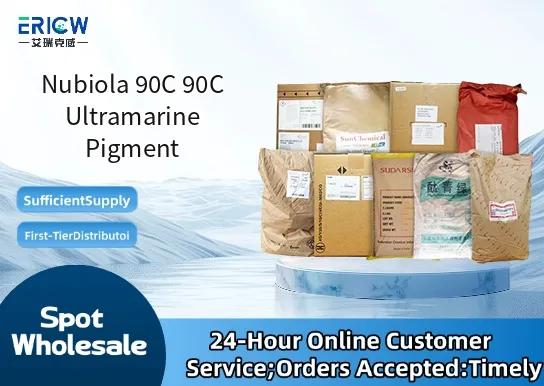
High chroma and exceptional blue purity with excellent lightfastness in non-acidic media.
Thermally stable up to 180°C, suitable for medium-temperature processing applications.
Low water-soluble sulfate content, minimizing blooming and migration in polymer systems.
Optimized particle size distribution for enhanced dispersion and gloss retention in coatings and plastics.
Free of heavy metals and compliant with major global regulatory frameworks including REACH and RoHS.
Architectural and industrial solvent-based and water-based coatings.
Masterbatch and color concentrates for polyolefins (PP, PE) and engineering thermoplastics.
Printing inks for packaging and decorative applications.
Plastic caps, closures, and consumer goods requiring vibrant, consistent blue hues.
Artists’ acrylics, gouache, and specialty graphic arts media.
| Chemical Type | Sodium aluminum silicate sulfide (synthetic ultramarine) |
| Product Form | Fine dry powder |
| Appearance | Brilliant violet-blue free-flowing powder |
| Primary Applications | Coatings, plastics, inks, artists’ colors |
| Key Features | High tinting strength, low acidity sensitivity, excellent dispersibility |
| Benefits | Color consistency, reduced formulation complexity, extended shelf life in dispersions |
| pH Stability Range | 7.0–9.5 (stable; decomposes below pH 6.0) |
| Volatile Matter (105°C, 2 h) | ≤ 2.0 wt% |
Q1: What is the primary chemical composition of Nubiola 90C Ultramarine Pigment?
A: Nubiola 90C is a synthetic sodium aluminosilicate-based pigment with polysulfide chromophores, delivering its characteristic intense blue hue through the crystalline structure of ultramarine, not metal oxides or organic dyes.
Q2: Is Nubiola 90C suitable for use in acid-sensitive applications such as certain coatings or inks?
A: No — like most ultramarine pigments, Nubiola 90C is alkali-stable but susceptible to degradation in acidic environments (pH < 5), which may cause fading or color shift; it is best suited for neutral-to-alkaline systems including architectural paints, artist materials, and select plastics.
Q3: How does Nubiola 90C perform under heat exposure during processing?
A: Nubiola 90C exhibits good thermal stability up to approximately 180–200 °C for short durations, making it suitable for many powder coating curing cycles and low-temperature plastic compounding; prolonged exposure above this range may lead to partial desulfurization and reduced chroma.
Q4: Can Nubiola 90C be used in food-contact plastics or packaging inks?
A: Nubiola 90C is not authorized for direct food-contact applications under major global regulatory frameworks; it is intended for industrial, decorative, and non-interactive consumer goods where migration risk is not a concern.
Contact With Us:
E-mail: wangxingqiang@ericwchem.com
Have a Questions? Call Us:
Add:
Building A1, Jiete Industrial Park, Huangpu District, Guangzhou City, Guangdong Province, China