English
 Español
 tiếng việt
 русский
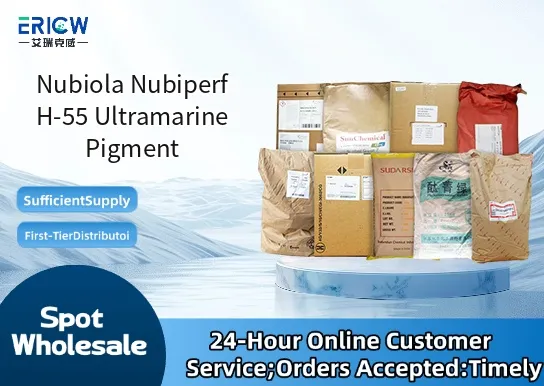
Exceptional lightfastness and weather resistance for long-term color stability.
High tinctorial strength with intense, clean blue hue (CIE L*a*b* typical: L* ≈ 48, a* ≈ −12, b* ≈ −32).
Excellent heat stability up to 180 °C, suitable for medium-temperature polymer processing.
Low sulfate content and optimized particle size distribution for improved dispersion in aqueous and solvent-based systems.
Non-toxic, heavy-metal-free formulation compliant with global regulatory frameworks including EN 71-3 and FDA 21 CFR §178.3297.
Architectural and industrial coatings requiring durable, fade-resistant blue tones.
Plastic coloring for PP, HDPE, and PS in consumer goods, packaging, and automotive interior components.
Masterbatch production for film, fibers, and injection-molded parts.
Inks for packaging gravure and flexographic printing where color consistency and clarity are critical.
Construction materials including dry-mix mortars, concrete pigments, and stucco formulations.
| Chemical Type | Sodium aluminum silicate sulfide (synthetic ultramarine) |
| Product Form | Fine free-flowing powder |
| Appearance | Deep violet-blue granular powder |
| Primary Applications | Coatings, plastics, inks, construction materials |
| Key Features | Lightfastness Grade 7–8 (ISO 105-B02), pH stability 5.5–9.0 |
| Benefits | Low dust generation, excellent dispersibility, non-bleeding in polyolefins |
| Storage Conditions | Store in cool, dry place below 30 °C; protect from moisture and direct sunlight |
| Regulatory Compliance | REACH registered; compliant with EU Directive 2009/48/EC (Toys) and GMP for food-contact plastics (EU No. 10/2011) |
Q1: What is the primary chemical composition and structural basis of Nubiperf H-55?
A: Nubiperf H-55 is a synthetic ultramarine pigment based on a sodium aluminosilicate framework with polysulfide chromophores. Its intense blue hue arises from the trapped S₃⁻ radical anions within the sodalite cage structure, offering excellent lightfastness and thermal stability typical of high-performance ultramarines.
Q2: Is Nubiperf H-55 suitable for use in acid-sensitive applications such as certain coatings or inks?
A: No — like all standard ultramarine pigments, Nubiperf H-55 is alkaline and susceptible to discoloration or degradation in acidic environments (pH < 7). It is recommended for neutral to alkaline systems only; for acidic media, alternative blue pigments such as phthalocyanine blues should be considered.
Q3: How does Nubiperf H-55 perform under elevated temperature conditions during processing?
A: Nubiperf H-55 exhibits good thermal stability up to approximately 200 °C in short-term exposure, making it suitable for many thermoplastic compounding and baking enamel applications. Prolonged exposure above this threshold may lead to gradual fading due to oxidation of the sulfur-based chromophores.
Q4: What is the typical dosage range when incorporating Nubiperf H-55 into polymer masterbatches or architectural paints?
A: Dosage depends on the desired shade intensity and opacity requirements, but it is typically used at low concentrations — generally ranging from 0.1% to 2% by weight in most industrial formulations. Optimal dispersion and compatibility testing are recommended for each specific system.
Q5: Can Nubiperf H-55 be safely used in direct food-contact plastics or cosmetics?
A: Nubiperf H-55 is not approved for direct food-contact applications or cosmetic use under current global regulatory frameworks. It is intended for industrial and decorative applications where regulatory compliance for ingestion or dermal exposure is not required.
Contact With Us:
E-mail: wangxingqiang@ericwchem.com
Have a Questions? Call Us:
Add:
Building A1, Jiete Industrial Park, Huangpu District, Guangzhou City, Guangdong Province, China