English
 Español
 tiếng việt
 русский
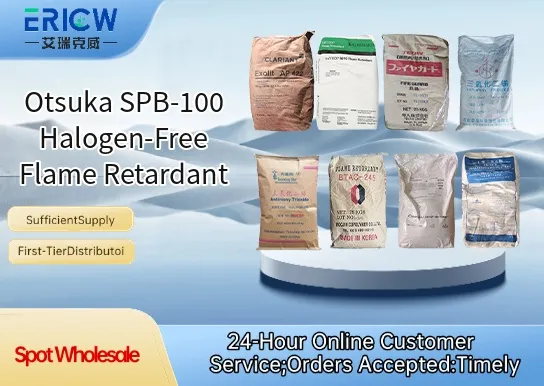
Phosphorus-nitrogen synergistic system enabling high flame retardancy without halogenated compounds.
Low smoke and low toxicity during combustion, meeting stringent environmental and safety standards (e.g., UL 94 V-0, RoHS, REACH).
Excellent thermal stability up to 300 °C, supporting processing in engineering thermoplastics.
Good compatibility with polyolefins, polyamides, and thermoplastic polyurethanes (TPU).
Non-migrating formulation ensuring long-term flame-retardant performance and surface integrity.
Wire and cable insulation for building wiring and data transmission cables.
Automotive interior components including dashboards, door panels, and seat frames.
Electronics housings for consumer devices, power adapters, and LED lighting enclosures.
Industrial conveyor belts requiring fire-safe polymer composites.
3D printing filaments (e.g., PA6/PA12-based) needing UL-certified flame resistance.
| Chemical Type | Phosphorus–nitrogen intumescent flame retardant |
| Product Form | Free-flowing white granules |
| Appearance | Off-white to light beige granules |
| Density | 1.45–1.55 g/cm³ |
| Moisture Content | ≤ 0.3% (by weight) |
| Thermal Decomposition Onset | ≥ 280 °C (TGA, 5% weight loss in air) |
| Primary Applications | Polyolefins, polyamides, TPU, and thermoset composites |
| Key Certifications | UL 94 V-0 (at ≥1.6 mm), RoHS 2011/65/EU compliant, REACH SVHC-free |
Q1: What types of polymers is SPB-100 compatible with?
A: SPB-100 is primarily designed for use in engineering thermoplastics such as polyamide (PA6, PA66), polybutylene terephthalate (PBT), and polycarbonate blends. It demonstrates good dispersion and thermal stability during melt processing in these systems.
Q2: How does SPB-100 achieve flame retardancy without halogens?
A: SPB-100 functions through a synergistic phosphorus–nitrogen mechanism, promoting char formation on the polymer surface during combustion and suppressing flammable gas release—eliminating reliance on halogenated compounds or heavy metals.
Q3: Is SPB-100 suitable for applications requiring electrical insulation properties?
A: Yes—SPB-100 exhibits low ionic impurity content and maintains favorable dielectric strength and comparative tracking index (CTI) in formulated compounds, making it appropriate for electronic and electrical components where insulation integrity is critical.
Q4: Does SPB-100 affect mechanical performance or processing behavior?
A: When properly dispersed, SPB-100 typically preserves tensile strength and impact resistance in host resins. It shows good thermal stability up to standard processing temperatures and does not significantly increase melt viscosity under typical extrusion or injection molding conditions.
Q5: What is the recommended dosage range for achieving UL94 V-0 rating?
A: Dosage depends on the base polymer, filler system, and part geometry—but SPB-100 is generally effective at low concentrations, typically ranging from 0.1% to 2% by weight in optimized formulations targeting UL94 V-0 at 1.6 mm thickness.
Contact With Us:
E-mail: wangxingqiang@ericwchem.com
Have a Questions? Call Us:
Add:
Building A1, Jiete Industrial Park, Huangpu District, Guangzhou City, Guangdong Province, China