English
 Español
 tiếng việt
 русский
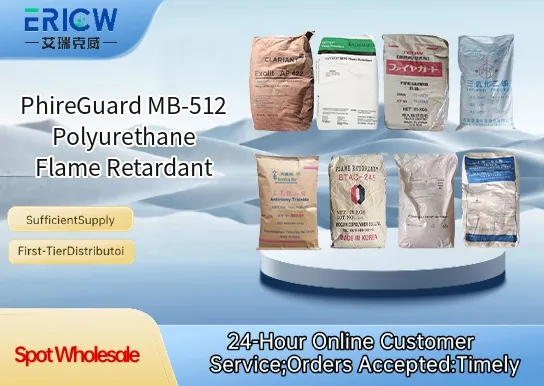
Halogen-free formulation ensures low smoke density and reduced toxic gas emission during combustion.
Excellent compatibility with flexible and rigid polyurethane foam systems without compromising physical properties.
Efficient char-forming mechanism enhances flame inhibition and improves fire resistance in PU matrices.
Thermally stable up to 220 °C, supporting standard PU processing conditions including slabstock and molded foam production.
Non-migrating design provides long-term flame-retardant performance and prevents surface blooming or leaching.
Flexible polyurethane foams for upholstered furniture and automotive seating.
Rigid PU insulation boards used in building envelope systems and cold storage panels.
Integral skin and microcellular PU foams for transportation interior components.
PU-based carpet underlays requiring compliance with CAL TB 117-2013 and EN 1021-1/2.
Industrial gasketing and sealing foams where fire safety and dimensional stability are critical.
| Chemical Type | Phosphorus-nitrogen synergistic intumescent system |
| Product Form | Powder |
| Appearance | White to off-white free-flowing powder |
| Primary Applications | Flexible & rigid polyurethane foams |
| Key Features | Halogen-free, non-migrating, thermally stable |
| Benefits | Meets UL 94 HF-1, passes ASTM E84 Class 1 (Smoke Developed ≤ 450) |
| Recommended Loading Level | 12–18 wt% in polyol phase (varies by foam formulation) |
| Storage Conditions | Store in cool, dry place; protect from moisture and direct sunlight |
Q1: What types of polyurethane systems is PhireGuard MB-512 compatible with?
A: PhireGuard MB-512 is formulated for use in both flexible and rigid polyurethane foams, including slabstock, molded, and spray-applied systems. It demonstrates good compatibility with common polyol blends and isothiocyanate-based isocyanates, particularly MDI and TDI derivatives.
Q2: How does PhireGuard MB-512 achieve flame retardancy without halogenated chemistry?
A: PhireGuard MB-512 operates primarily through an intumescent mechanism, promoting char formation and reducing heat release during combustion. Its phosphorus- and nitrogen-containing structure supports gas-phase radical quenching and condensed-phase barrier development, delivering effective flame inhibition while remaining halogen-free.
Q3: What is the typical dosage range for achieving UL 94 HB or HF-1 performance in flexible PU foam?
A: Dosage depends on foam density, formulation complexity, and target fire classification, but PhireGuard MB-512 is typically used at low concentrations—generally ranging from 0.1% to 2% by weight relative to total polyol—when optimizing for UL 94 HB or HF-1 compliance in flexible applications.
Q4: Does PhireGuard MB-512 impact processing stability or foam physical properties?
A: When properly incorporated, PhireGuard MB-512 exhibits minimal interference with cream time, rise profile, or demold time. It generally maintains acceptable tensile strength, elongation, and compression set in finished foams, though fine-tuning of catalyst levels may be needed depending on system sensitivity.
Contact With Us:
E-mail: wangxingqiang@ericwchem.com
Have a Questions? Call Us:
Add:
Building A1, Jiete Industrial Park, Huangpu District, Guangzhou City, Guangdong Province, China