English
 Español
 tiếng việt
 русский
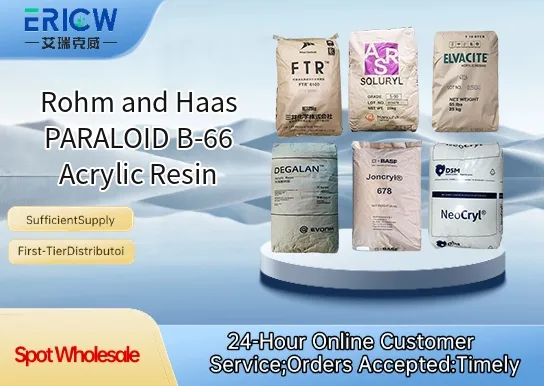
High gloss and excellent clarity for premium visual performance in clear coatings.
Outstanding UV resistance and long-term color retention, minimizing yellowing and degradation.
Good flexibility and impact resistance, enabling durable film formation on diverse substrates.
Excellent compatibility with nitrocellulose, CAB, and other common coating resins.
Low VOC formulation capability, supporting compliance with stringent environmental regulations.
Automotive refinish clearcoats and basecoat/clearcoat systems.
Industrial maintenance coatings for metal and plastic substrates.
Architectural and decorative clear topcoats for wood and metal surfaces.
Coatings for consumer electronics housings requiring scratch and abrasion resistance.
Overprint varnishes and protective finishes for flexible packaging films.
| Chemical Type | Acrylic copolymer |
| Product Form | Free-flowing granular solid |
| Appearance | White to off-white granules |
| Primary Applications | Clearcoats, topcoats, protective coatings |
| Key Features | Gloss enhancement, UV stability, resin compatibility |
| Benefits | Durable finish, low yellowing, formulation versatility |
| Solubility | Soluble in common organic solvents (e.g., esters, ketones, aromatic hydrocarbons) |
| Storage Stability | Stable under dry, cool conditions; shelf life ≥ 24 months |
Q1: What is the primary function of PARALOID B-66 in coating formulations?
A: PARALOID B-66 is a solution-grade acrylic resin designed primarily as a rheology modifier and flow control agent. It helps improve sag resistance, enhance leveling, and stabilize pigment dispersion in solvent-borne industrial coatings and inks.
Q2: Is PARALOID B-66 compatible with common industrial resins and solvents?
A: Yes, PARALOID B-66 exhibits broad compatibility with alkyds, polyester, epoxy, and other acrylic resins in conventional solvent systems. It is typically supplied in aromatic or ketone-based solvents and can be readily incorporated into standard formulation protocols without phase separation under proper mixing conditions.
Q3: How should PARALOID B-66 be added to a coating formulation to achieve optimal performance?
A: For best results, it is recommended to add PARALOID B-66 during the let-down stage, after pigments and primary binders are dispersed. Pre-dilution with a portion of the system solvent may aid uniform incorporation. Avoid high-shear addition directly to low-viscosity components to prevent premature gelation or viscosity spikes.
Q4: Does PARALOID B-66 contribute to film hardness or flexibility in the final coating?
A: While not a primary film-former, PARALOID B-66 can influence cured film properties by modifying crosslink density and phase morphology. It generally supports balanced hardness and flexibility without significantly compromising impact resistance or adhesion in properly formulated systems.
Contact With Us:
E-mail: wangxingqiang@ericwchem.com
Have a Questions? Call Us:
Add:
Building A1, Jiete Industrial Park, Huangpu District, Guangzhou City, Guangdong Province, China