English
 Español
 tiếng việt
 русский
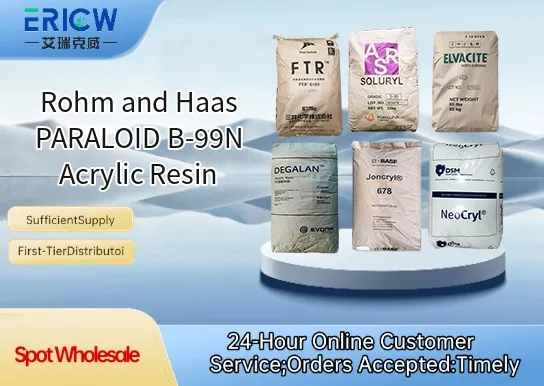
High solids content acrylic emulsion offering excellent film formation at ambient temperatures.
Outstanding adhesion to diverse substrates including metals, plastics, and primed wood.
Good alkali resistance and water tolerance for use in demanding industrial coating systems.
Low VOC formulation compliant with stringent environmental regulations for architectural and industrial coatings.
Excellent compatibility with crosslinkers such as melamine-formaldehyde and blocked isocyanates.
Industrial maintenance coatings for metal equipment and infrastructure.
Waterborne coil coatings requiring high gloss and corrosion resistance.
Architectural metal façade coatings for aluminum and steel substrates.
Plastic coatings for automotive interior trim and appliance housings.
| Chemical Type | Acrylic copolymer emulsion |
| Product Form | White to slightly bluish opaque liquid |
| Non-Volatile Content (wt%) | 48.0 – 50.0% |
| pH | 7.5 – 8.5 |
| Minimum Film Formation Temperature (MFFT) | 15 °C |
| Particle Size (D50) | 120 – 160 nm |
| Viscosity (Brookfield RVT, #2 spindle, 20 rpm) | 50 – 300 mPa·s |
| Freeze-Thaw Stability | Passes 3 cycles (–18 °C / 23 °C) |
Q1: What is the primary function of PARALOID B-99N in coating formulations?
A: PARALOID B-99N is a water-dispersible acrylic resin designed primarily as a coalescing aid and film-forming assistant in waterborne architectural and industrial coatings. It enhances low-temperature film formation, improves scrub resistance, and contributes to gloss retention without significantly increasing VOC content.
Q2: Is PARALOID B-99N compatible with common waterborne acrylic and vinyl acetate-based emulsions?
A: Yes, PARALOID B-99N exhibits broad compatibility with a wide range of waterborne polymer dispersions, including acrylic, styrene-acrylic, and vinyl acetate copolymer emulsions. Compatibility should be verified in the final formulation due to variations in surfactant systems and pH.
Q3: How does PARALOID B-99N differ from traditional coalescing solvents like Texanol or DPM?
A: Unlike volatile organic coalescents, PARALOID B-99N is a non-volatile, polymeric additive that remains in the dried film. This provides lasting improvements in mechanical properties—such as block resistance and hardness development—while supporting lower-VOC and more sustainable formulation strategies.
Q4: What are typical dosage guidelines for PARALOID B-99N in architectural flat and low-sheen paints?
A: Dosage is formulation-dependent but generally ranges from 0.1% to 2% by weight of total formulation. Optimal levels are determined through performance testing, balancing film formation, viscosity impact, and cost-effectiveness.
Contact With Us:
E-mail: wangxingqiang@ericwchem.com
Have a Questions? Call Us:
Add:
Building A1, Jiete Industrial Park, Huangpu District, Guangzhou City, Guangdong Province, China