English
 Español
 tiếng việt
 русский
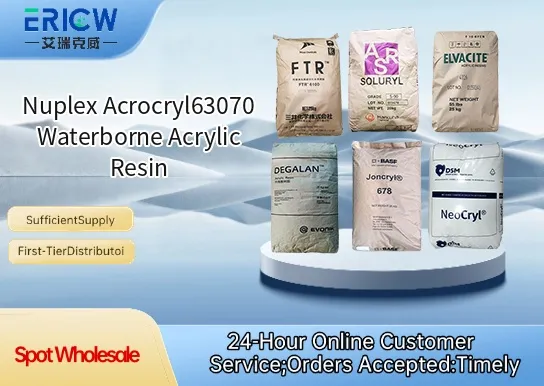
Low-VOC, environmentally compliant formulation meeting stringent global regulatory requirements.
Excellent film formation at ambient temperature without coalescent aid.
Superior water resistance and alkali stability in cured films.
High gloss retention and excellent color acceptance for pigmented systems.
Good compatibility with common waterborne crosslinkers and additives.
Architectural interior and exterior wall paints.
Industrial maintenance coatings for metal substrates.
Wood coatings including primers and topcoats for furniture and cabinetry.
Plastic coatings requiring flexibility and adhesion on ABS and PVC.
Waterborne can and coil coatings requiring corrosion inhibition support.
| Chemical Type | Acrylic copolymer dispersion |
| Product Form | White to slightly bluish opaque liquid |
| Appearance | Homogeneous aqueous dispersion |
| Solids Content (wt%) | 48 ± 1% |
| pH | 8.0 – 9.0 |
| Viscosity (Brookfield, RVT, #2 spindle, 20 rpm, 25°C) | 100 – 300 mPa·s |
| Minimum Film Formation Temperature (MFFT) | ≈ 15°C |
| Density (25°C) | 1.01 – 1.03 g/cm³ |
Q1: What is the primary application area for Acrocryl63070?
A: Acrocryl63070 is a waterborne acrylic resin specifically engineered for high-performance architectural and industrial maintenance coatings, including interior/exterior wall paints, primers, and low-VOC decorative finishes where durability, scrub resistance, and film clarity are critical.
Q2: Is Acrocryl63070 compatible with common co-binders and additives used in water-based systems?
A: Yes — it demonstrates good compatibility with typical waterborne co-binders such as vinyl acetate-ethylene (VAE) or styrene-acrylic dispersions, as well as standard rheology modifiers, defoamers, and biocides. Compatibility testing under actual formulation conditions is recommended prior to full-scale production.
Q3: How does Acrocryl63070 contribute to film formation and performance in low-PVC formulations?
A: As a self-crosslinking acrylic resin, it promotes robust film formation at ambient temperatures without requiring external crosslinkers. This enhances early water resistance, hardness development, and adhesion—particularly beneficial in low-PVC architectural coatings targeting premium aesthetics and long-term washability.
Q4: What are the storage and handling recommendations for this resin?
A: Store in tightly sealed containers at temperatures between 5 °C and 30 °C, away from direct sunlight and freezing conditions. Avoid prolonged exposure to high humidity during handling, and ensure proper ventilation when transferring or mixing. The product is supplied as a stable aqueous dispersion and does not require special hazard labeling under standard transport regulations.
Contact With Us:
E-mail: wangxingqiang@ericwchem.com
Have a Questions? Call Us:
Add:
Building A1, Jiete Industrial Park, Huangpu District, Guangzhou City, Guangdong Province, China