English
 Español
 tiếng việt
 русский
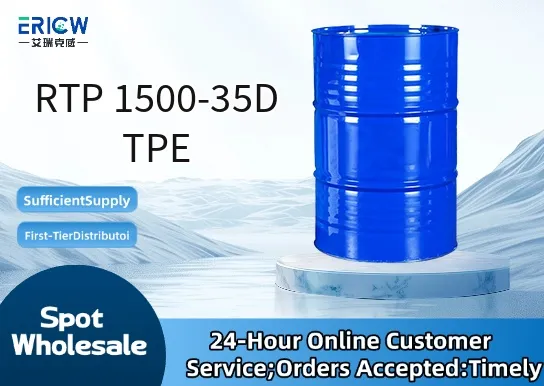
Soft-touch elastomeric feel with Shore A 35 hardness for enhanced user comfort and grip.
Excellent melt processability suitable for injection molding, extrusion, and overmolding onto PP, ABS, and PS substrates.
Good UV resistance and thermal stability up to 80 °C continuous service temperature.
Halogen-free formulation compliant with RoHS and REACH directives.
Low compression set (<25% at 70 °C/22 h) ensuring long-term shape retention in sealing and gasket applications.
Overmolded grips for power tools and hand-held consumer electronics.
Soft-touch automotive interior trim components including control knobs and gear shift boots.
Seals and gaskets for HVAC housings and appliance enclosures.
Ergonomic medical device housings requiring tactile feedback and skin-safe contact.
Flexible connectors and cable strain reliefs in industrial equipment.
| Chemical Type | Thermoplastic Elastomer (TPE) — Styrenic Block Copolymer (SBC) based |
| Product Form | Pellets |
| Appearance | Off-white translucent granules |
| Shore Hardness (A) | 35 ± 2 |
| Melt Flow Rate (230 °C/2.16 kg) | 18–22 g/10 min |
| Density | 0.90–0.92 g/cm³ |
| Tensile Strength | 8–10 MPa |
| Elongation at Break | 450–550% |
Q1: What is RTP 1500-35D TPE primarily used for?
A: RTP 1500-35D TPE is a thermoplastic elastomer compound engineered for overmolding and soft-touch applications—particularly on rigid substrates such as polypropylene, ABS, and polycarbonate. It is commonly selected for consumer goods, medical device components, and industrial grips where flexibility, tactile feel, and reliable adhesion are critical.
Q2: Does RTP 1500-35D TPE require drying before processing?
A: Yes—like most hygroscopic TPEs, RTP 1500-35D TPE should be dried prior to melt processing. A typical recommendation is drying at 70–80 °C for 2–4 hours using a desiccant dryer. Moisture content exceeding 0.05% may lead to surface defects or reduced mechanical performance during injection molding or extrusion.
Q3: How does RTP 1500-35D TPE achieve adhesion to rigid thermoplastics?
A: Adhesion relies on optimized polymer compatibility and interfacial entanglement during melt processing. The formulation includes functionalized polyolefin-based compatibilizers that enhance bonding with common rigid substrates—especially polypropylene and polyethylene—without requiring primers or surface treatment under standard molding conditions.
Q4: Is RTP 1500-35D TPE suitable for medical applications?
A: RTP 1500-35D TPE is designed with medical-grade raw materials and is frequently used in non-implantable, short-term contact devices. While it meets common biocompatibility screening expectations (e.g., USP Class VI), final regulatory compliance—including ISO 10993 evaluation—depends on the finished part’s intended use, processing history, and sterilization method. Customers are advised to conduct application-specific validation.
Contact With Us:
E-mail: wangxingqiang@ericwchem.com
Have a Questions? Call Us:
Add:
Building A1, Jiete Industrial Park, Huangpu District, Guangzhou City, Guangdong Province, China