English
 Español
 tiếng việt
 русский
Soft-touch, skin-friendly surface with excellent tactile feel and low coefficient of friction.
Good processability on standard injection molding and extrusion equipment without drying requirement.
Excellent adhesion to polypropylene (PP) and polyethylene (PE) substrates for overmolding applications.
RoHS-compliant and free of phthalates, heavy metals, and halogenated flame retardants.
Stable physical properties across a wide service temperature range (−40 °C to +80 °C).
Overmolded grips for power tools, garden equipment, and hand-held appliances.
Soft-touch components in automotive interiors including trim bezels, control knobs, and cupholder liners.
Seals and gaskets for consumer electronics enclosures and waterproof housings.
Ergonomic handles for medical devices and diagnostic instruments.
Flexible hinges and snap-fit components in durable goods assemblies.
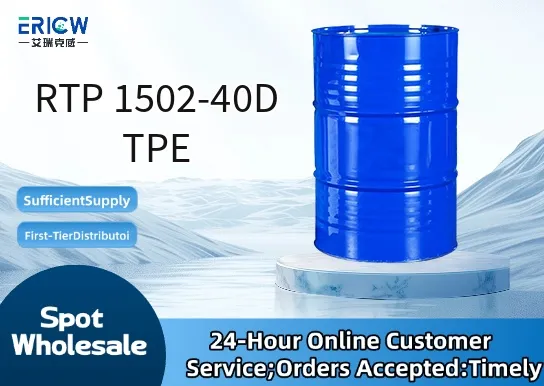
| Chemical Type | Thermoplastic Elastomer (TPE) – Styrenic Block Copolymer (SBC) based |
| Product Form | Pellets |
| Appearance | Off-white, translucent granules |
| Hardness (Shore A) | 40 ± 3 |
| Density (g/cm³) | 0.91 ± 0.01 |
| Melt Flow Rate (230 °C/2.16 kg, g/10 min) | 15–25 |
| Primary Applications | Overmolding, soft-touch finishing, flexible sealing |
| Key Features | Low-volatility, good UV stability (unfilled), recyclable |
Q1: What is the primary function of RTP 1502-40D TPE in polymer formulations?
A: RTP 1502-40D TPE is a thermoplastic elastomer modifier designed to enhance flexibility, impact resistance, and soft-touch characteristics in rigid thermoplastics—particularly polypropylene and polyethylene-based compounds—without significantly compromising melt processability or thermal stability.
Q2: Is RTP 1502-40D TPE suitable for applications requiring repeated flexing or dynamic mechanical stress?
A: Yes—it exhibits excellent elastic recovery and fatigue resistance, making it well-suited for components subjected to cyclic bending, sealing, or gasketing functions, especially where long-term resilience and low permanent set are critical.
Q3: How is RTP 1502-40D TPE typically incorporated into base resins?
A: It is commonly blended via standard melt compounding techniques such as twin-screw extrusion. Dosage depends on formulation requirements but generally ranges from 0.1% to 2% by weight for surface modification effects, or up to 20–30% for structural elastomeric blends.
Q4: Does RTP 1502-40D TPE require drying before processing?
A: While not highly hygroscopic, it is recommended to dry RTP 1502-40D TPE at 60–70 °C for 2–4 hours prior to high-temperature processing to minimize potential surface defects and ensure consistent melt behavior.
Contact With Us:
E-mail: wangxingqiang@ericwchem.com
Have a Questions? Call Us:
Add:
Building A1, Jiete Industrial Park, Huangpu District, Guangzhou City, Guangdong Province, China