English
 Español
 tiếng việt
 русский
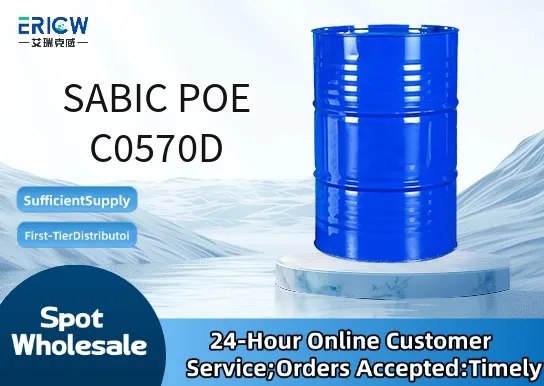
Excellent low-temperature flexibility and impact resistance down to –40 °C
Outstanding melt processability for high-speed extrusion and injection molding
Superior compatibility with polypropylene (PP) and polyethylene (PE) for blend modification
Low density (≈0.865 g/cm³) enabling lightweighting in end-use parts
Good UV stability and long-term weatherability without additional stabilizers
Automotive interior trim components including door panels and instrument clusters
Toughened polypropylene (PP) compounds for under-hood applications
Flexible packaging films requiring seal integrity and puncture resistance
Soft-touch overmolding for consumer electronics and power tools
Medical tubing and fluid-handling components requiring biocompatibility support
| Chemical Type | Polyolefin Elastomer (POE), ethylene-octene copolymer |
| Product Form | Natural-colored pellets |
| Appearance | Free-flowing, semi-crystalline granules |
| Primary Applications | Thermoplastic elastomer (TPE) modifier, PP/PE impact modifier |
| Key Features | Low density, high elasticity, excellent processability |
| Benefits | Enhanced toughness, improved surface finish, reduced cycle times |
| Processing Method | Injection molding, extrusion, blow molding |
| Regulatory Compliance | Meets FDA 21 CFR §177.1520 for food contact (subject to formulation) |
Q1: What is the primary function of SABIC POE C0570D in polymer blends?
A: SABIC POE C0570D is an ethylene-octene polyolefin elastomer designed primarily as a toughening agent and impact modifier—especially for polypropylene (PP) and other polyolefin-based systems—enhancing ductility, low-temperature impact resistance, and melt processability without significantly compromising stiffness.
Q2: Is SABIC POE C0570D suitable for use in food-contact applications?
A: SABIC POE C0570D is manufactured to meet general-purpose polymer purity requirements and is commonly used in non-food-contact industrial and automotive applications. For food-contact use, end-product compliance must be verified by the compounder or converter through full regulatory assessment—including migration testing and formulation review—as SABIC does not certify this grade for direct food contact.
Q3: How does SABIC POE C0570D compare to EPDM or EPR in PP modification?
A: Unlike traditional EPDM or EPR elastomers, SABIC POE C0570D offers superior compatibility with PP due to its polyolefin backbone, resulting in finer dispersion, improved interfacial adhesion, and more consistent mechanical property enhancement—particularly in impact strength and elongation at break—while maintaining better process stability during extrusion and injection molding.
Q4: What processing methods are recommended for SABIC POE C0570D?
A: SABIC POE C0570D is optimized for conventional thermoplastic processing techniques including compounding via twin-screw extrusion, injection molding, and blow molding. It exhibits good melt flow characteristics and thermal stability under standard polyolefin processing conditions, and typically requires no special drying prior to processing.
Contact With Us:
E-mail: wangxingqiang@ericwchem.com
Have a Questions? Call Us:
Add:
Building A1, Jiete Industrial Park, Huangpu District, Guangzhou City, Guangdong Province, China