English
 Español
 tiếng việt
 русский
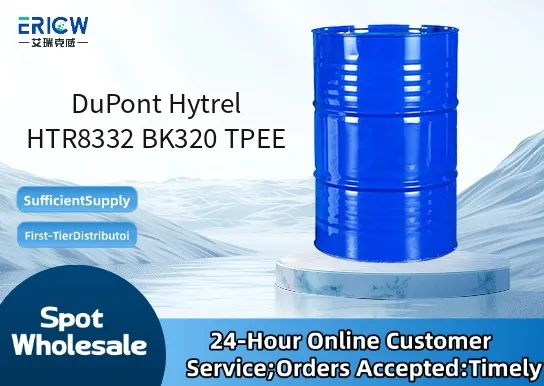
High heat resistance with continuous use temperature up to 150 °C
Excellent mechanical resilience and fatigue resistance under dynamic loading
Outstanding chemical resistance to oils, greases, and many automotive fluids
Good processability via injection molding and extrusion with low moisture sensitivity
Black color (BK320) with consistent pigment dispersion and UV stabilization
Automotive under-hood components such as air ducts and sensor housings
Industrial power transmission parts including timing belt teeth and pulley covers
Oil and gas downhole tool seals requiring thermal and chemical stability
High-performance sporting goods components like ski binding parts and bicycle suspension bushings
Electrical connectors and housings exposed to elevated temperatures and mechanical stress
| Chemical Type | Thermoplastic polyester elastomer (TPEE) |
| Product Form | Pellets |
| Appearance | Black, free-flowing pellets |
| Primary Applications | Dynamic mechanical parts requiring heat and chemical resistance |
| Key Features | High modulus, excellent creep resistance, low compression set |
| Benefits | Extended service life in demanding thermal environments; reduced part count vs. multi-material assemblies |
| Processing Method | Injection molding, extrusion |
| Standard Compliance | RoHS compliant; meets UL 94 HB flammability rating |
Q1: What is the primary advantage of Hytrel HTR8332 BK320 over standard TPEE grades?
A: Hytrel HTR8332 BK320 is a heat-stabilized, black-pigmented TPEE grade specifically engineered for enhanced thermal stability and long-term performance in elevated-temperature applications—such as under-hood automotive components or industrial seals—where conventional TPEEs may experience premature softening or property loss.
Q2: Is this grade suitable for applications requiring UV resistance and outdoor exposure?
A: Yes—the carbon black pigment (BK320) provides inherent UV stabilization, making Hytrel HTR8332 BK320 well-suited for outdoor applications where prolonged sunlight exposure could otherwise lead to surface degradation or embrittlement in unpigmented thermoplastic elastomers.
Q3: Can Hytrel HTR8332 BK320 be overmolded onto common engineering plastics like PBT or PC?
A: Yes—it exhibits good adhesion to several polar engineering thermoplastics when processed under appropriate temperature, pressure, and mold-surface condition parameters. Bond strength depends on interfacial compatibility, melt temperature control, and part geometry, and is typically validated through application-specific bonding trials.
Q4: Does this grade meet food-contact or medical device regulatory requirements?
A: Hytrel HTR8332 BK320 is not pre-qualified for food-contact or medical device applications. While the base Hytrel polymer may be used in certain regulated environments, this specific black-pigmented, heat-stabilized grade requires formal regulatory assessment—including extractables profiling and biocompatibility testing—by the end-user’s qualified regulatory team prior to use in such applications.
Contact With Us:
E-mail: wangxingqiang@ericwchem.com
Have a Questions? Call Us:
Add:
Building A1, Jiete Industrial Park, Huangpu District, Guangzhou City, Guangdong Province, China