English
 Español
 tiếng việt
 русский
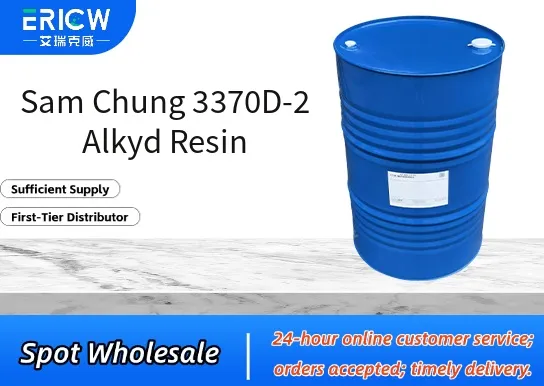
Medium-oil-length alkyd resin offering balanced drying speed and film flexibility.
Excellent compatibility with nitrocellulose, PVC plastisols, and common organic solvents.
Provides superior gloss retention and long-term color stability in ambient-cure coatings.
Low viscosity profile enables high-solids formulation without sacrificing application performance.
Designed for enhanced weather resistance and alkali tolerance in industrial maintenance systems.
General-purpose air-drying industrial maintenance coatings.
Undercoats and primers for metal substrates including steel and aluminum.
Decorative wood finishes requiring good sandability and recoatability.
Flexible packaging inks where solvent release and substrate adhesion are critical.
Marine-grade topcoats for non-immersion above-waterline applications.
| Chemical Type | Medium-oil modified alkyd resin (soybean oil-based) |
| Product Form | Liquid, solvent-borne (xylene/toluene blend) |
| Appearance | Clear to pale yellow viscous liquid |
| Non-Volatile Content (wt%) | 55–58% (at 120°C, 60 min) |
| Viscosity (25°C, Brookfield RV, spindle #4, 20 rpm) | 12,000–16,000 cP |
| Acid Value (mg KOH/g) | 8–12 |
| Density (25°C) | 1.02–1.05 g/cm³ |
| Solubility | Freely soluble in aromatic hydrocarbons, ketones, and esters |
Q1: What is the primary application of Sam Chung 3370D-2 Alkyd Resin?
A: Sam Chung 3370D-2 is a medium-oil alkyd resin designed primarily for use in solvent-based industrial maintenance coatings, general-purpose enamels, and protective finishes where good gloss retention, flexibility, and through-dry performance are required.
Q2: Is this resin compatible with common crosslinkers such as melamine-formaldehyde or polyisocyanates?
A: Yes, Sam Chung 3370D-2 is formulated to be compatible with standard amino resins (e.g., melamine-formaldehyde) for baking systems, and can also be modified or blended for use in ambient-cure two-component polyurethane systems when properly formulated with suitable catalysts and co-resins.
Q3: How does Sam Chung 3370D-2 perform in terms of drying behavior and film formation?
A: It exhibits balanced air-drying characteristics—offering reasonable tack-free time and full through-dry within typical ambient conditions. Film formation delivers good hardness development over time without excessive brittleness, supporting both brush/roller and spray application methods.
Q4: Can this resin be thinned or adjusted with conventional organic solvents?
A: Yes—it is readily soluble in common aromatic and aliphatic hydrocarbon solvents (e.g., xylene, mineral spirits, high-flash naphthas) and can be adjusted to target viscosity ranges using standard coating diluents, subject to regulatory and safety guidelines for the intended application.
Contact With Us:
E-mail: wangxingqiang@ericwchem.com
Have a Questions? Call Us:
Add:
Building A1, Jiete Industrial Park, Huangpu District, Guangzhou City, Guangdong Province, China