English
 Español
 tiếng việt
 русский
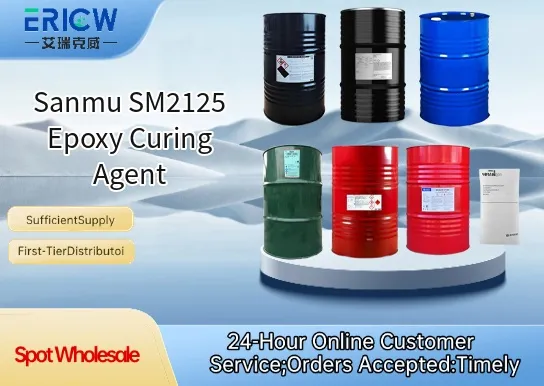
Low-viscosity liquid formulation for excellent mixing and processing with standard epoxy resins.
Fast-reacting amine-based chemistry enabling reduced cure times at ambient or mild elevated temperatures.
Superior adhesion to metals, composites, and concrete substrates without requiring surface priming.
Low exotherm profile ensures minimal thermal stress in thick-section castings and large-area laminates.
Good chemical resistance post-cure, particularly against aliphatic solvents and weak acids.
Structural adhesives for automotive and aerospace bonding assemblies.
Electrical potting and encapsulation compounds for power electronics and transformers.
High-performance flooring systems in industrial and cleanroom environments.
Composite matrix resin for filament-wound pressure vessels and wind turbine blade components.
Repair mortars and grouts for civil infrastructure rehabilitation.
| Chemical Type | Aliphatic polyamine modified |
| Product Form | Liquid |
| Appearance | Clear, pale yellow to amber liquid |
| Density (25°C) | 0.92–0.96 g/cm³ |
| Viscosity (25°C) | 180–240 mPa·s |
| Amine Value | 380–420 mg KOH/g |
| Primary Applications | Structural adhesives, potting, flooring, composites, repair mortars |
| Key Features | Low viscosity, fast ambient cure, low exotherm, excellent adhesion |
Q1: What types of epoxy resins is SM2125 compatible with?
A: SM2125 is formulated for broad compatibility with standard liquid and solid bisphenol-A and bisphenol-F epoxy resins, as well as many novolac and cycloaliphatic epoxies. Performance may vary depending on resin functionality and molecular weight, so compatibility testing in the final formulation is recommended.
Q2: How does SM2125 affect pot life and cure speed compared to conventional amine hardeners?
A: SM2125 offers a balanced reactivity profile—providing extended working time at ambient temperatures while enabling efficient thermal curing at elevated temperatures (e.g., 80–120 °C). It typically delivers faster gelation and full cure than latent aliphatic amines, without the volatility or handling concerns associated with traditional aromatic amines.
Q3: Is SM2125 suitable for applications requiring low surface energy or high chemical resistance?
A: Yes—when fully cured, systems containing SM2125 exhibit enhanced crosslink density, contributing to improved resistance to solvents, acids, and alkalis. Its molecular structure supports low moisture absorption and good interfacial adhesion, making it well-suited for protective coatings and composite matrices where long-term environmental stability is critical.
Q4: What safety and handling precautions should be observed?
A: SM2125 is classified as an irritant and should be handled using appropriate personal protective equipment (PPE), including nitrile gloves, safety goggles, and adequate ventilation. Avoid skin contact and inhalation of mists or vapors. Refer to the Safety Data Sheet (SDS) for detailed toxicological and first-aid information prior to use.
Q5: Can SM2125 be used in solvent-free or high-solids epoxy formulations?
A: Yes—SM2125 is a low-viscosity, reactive liquid that blends readily into 100% solids epoxy systems without requiring solvents. Its compatibility with high-molecular-weight resins and low volatility support formulation flexibility in adhesives, encapsulants, and powder coating base resins.
Contact With Us:
E-mail: wangxingqiang@ericwchem.com
Have a Questions? Call Us:
Add:
Building A1, Jiete Industrial Park, Huangpu District, Guangzhou City, Guangdong Province, China