English
 Español
 tiếng việt
 русский
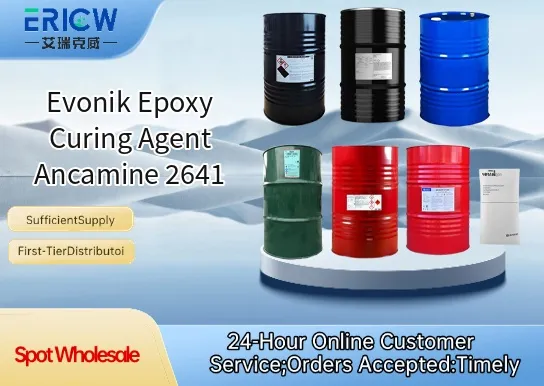
Fast-reacting aliphatic amine curing agent enabling rapid room-temperature cure of epoxy resins.
Low viscosity and excellent compatibility with standard liquid epoxy resins for easy processing and uniform mixing.
Delivers high mechanical strength, chemical resistance, and thermal stability in cured networks.
Low volatility and reduced amine odor compared to conventional aliphatic amines—supports safer handling and improved workplace environment.
Provides good flexibility and impact resistance without compromising hardness or adhesion performance.
Industrial maintenance coatings for steel and concrete substrates.
Electrical encapsulation and potting compounds for transformers and electronic components.
High-performance adhesive formulations requiring fast fixture and ambient-cure capability.
Repair mortars and grouts used in infrastructure rehabilitation projects.
Composite matrix systems for wind blade bonding and aerospace assembly applications.
| Chemical Type | Aliphatic polyamine |
| Product Form | Liquid |
| Appearance | Clear, pale yellow to amber liquid |
| Density (20 °C) | ~0.92 g/cm³ |
| Viscosity (25 °C) | ~150–250 mPa·s |
| Amine Value | ~380–420 mg KOH/g |
| Reactivity Profile | Room-temperature curable with standard DGEBA epoxy resins |
| Primary Applications | Coatings, adhesives, composites, electrical encapsulation |
Q1: What is the primary chemical class of Ancamine 2641?
A: Ancamine 2641 is a modified aliphatic amine-based epoxy curing agent, designed to offer balanced reactivity, low volatility, and improved handling safety compared to conventional aliphatic amines.
Q2: Is Ancamine 2641 suitable for ambient-cure epoxy systems?
A: Yes — it is specifically formulated for ambient- or low-temperature cure applications, delivering good film formation and mechanical properties without forced heating, making it well-suited for coatings, adhesives, and repair compounds used in field conditions.
Q3: How does Ancamine 2641 compare to standard DETA or TETA in terms of handling and odor?
A: Ancamine 2641 exhibits significantly reduced volatility and amine odor versus traditional linear aliphatic amines like DETA or TETA, resulting in improved workplace safety and operator comfort during mixing and application.
Q4: Can Ancamine 2641 be used in high-solids or solvent-free epoxy formulations?
A: Yes — its low viscosity and favorable compatibility with common epoxy resins enable formulation of high-solids and 100%-solids epoxy systems, supporting performance requirements in industrial maintenance and protective coatings.
Q5: What is the typical dosage range for Ancamine 2641 in standard epoxy formulations?
A: Dosage depends on the specific epoxy resin and desired performance profile, but it is generally used at low concentrations relative to resin weight — typically ranging from 0.1% to 2% by weight for catalytic activity in hybrid or co-curing systems, or higher amounts when serving as a primary amine hardener.
Contact With Us:
E-mail: wangxingqiang@ericwchem.com
Have a Questions? Call Us:
Add:
Building A1, Jiete Industrial Park, Huangpu District, Guangzhou City, Guangdong Province, China