English
 Español
 tiếng việt
 русский
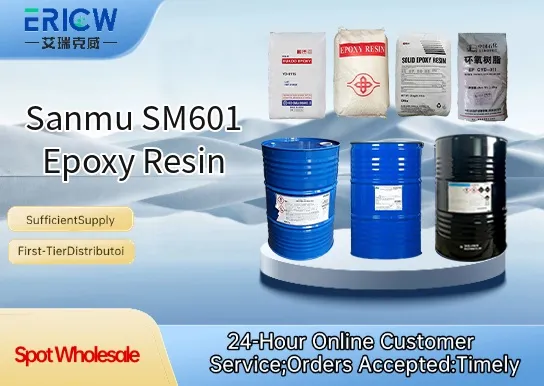
High-performance bisphenol-A based liquid epoxy resin with excellent mechanical strength and chemical resistance.
Low viscosity (10,000–12,000 cP at 25°C) enabling easy handling, mixing, and impregnation of fibers or fillers.
Outstanding adhesion to metals, composites, and cured thermosets—ideal for structural bonding and coating applications.
Good thermal stability with glass transition temperature (Tg) of cured system up to 125°C after post-cure.
Reactive diluent compatible, allowing formulation flexibility without significant loss in crosslink density.
Aerospace composite matrix resins for primary and secondary structural components.
Electrical insulation systems in high-voltage transformers and busbar encapsulation.
High-strength adhesive formulations for automotive metal-to-composite bonding.
Protective coatings for offshore and industrial steel infrastructure exposed to corrosive environments.
Prepreg and filament winding resins for wind turbine blade manufacturing.
| Chemical Type | Bisphenol-A epoxy resin |
| Product Form | Clear to pale yellow viscous liquid |
| Appearance | Transparent, homogeneous liquid, free from gels or sediment |
| Epoxy Equivalent Weight (EEW) | 184–190 g/eq |
| Viscosity (25°C) | 10,000–12,000 cP |
| Chlorine Content | ≤ 700 ppm |
| Volatiles Content | ≤ 0.3 wt% |
| Storage Stability | 12 months at ≤ 25°C in sealed original packaging |
Q1: What is the primary application field for Sanmu SM601 Epoxy Resin?
A: Sanmu SM601 is primarily formulated for high-performance protective coatings and electrical insulation systems, especially where enhanced chemical resistance, thermal stability, and adhesion to metal or composite substrates are required.
Q2: Is SM601 compatible with standard amine-based hardeners?
A: Yes, SM601 exhibits good reactivity with common aliphatic and cycloaliphatic amines, as well as aromatic amine adducts. Optimal cure profiles depend on hardener selection, stoichiometry, and processing conditions such as temperature and humidity.
Q3: How does SM601 compare to conventional bisphenol-A epoxy resins in terms of flexibility and toughness?
A: SM601 offers improved fracture toughness and impact resistance compared to standard DGEBA-type resins, due to its modified backbone structure—making it suitable for applications requiring reduced brittleness without sacrificing thermal or mechanical integrity.
Q4: Can SM601 be used in solvent-free or low-VOC formulations?
A: Yes, SM601 is designed for use in solvent-free, high-solids, and UV-curable hybrid systems. Its viscosity and reactivity profile support formulation flexibility while helping meet modern environmental and regulatory expectations for reduced volatile organic content.
Contact With Us:
E-mail: wangxingqiang@ericwchem.com
Have a Questions? Call Us:
Add:
Building A1, Jiete Industrial Park, Huangpu District, Guangzhou City, Guangdong Province, China