English
 Español
 tiếng việt
 русский
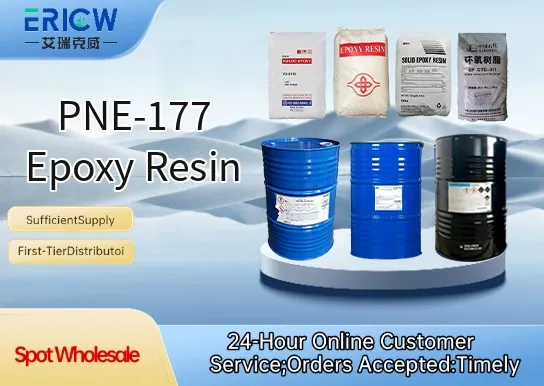
High reactivity with standard amine and anhydride hardeners for rapid cure at ambient or elevated temperatures.
Excellent adhesion to metals, composites, and treated plastics without requiring aggressive surface pretreatment.
Low viscosity (8,000–12,000 cP at 25°C) enabling easy processing via casting, impregnation, and resin transfer molding (RTM).
Superior chemical resistance to alkalis, dilute acids, and common solvents after full cure.
Low chloride content (< 500 ppm), supporting high reliability in electronic encapsulation and aerospace bonding applications.
Structural adhesive formulations for automotive chassis and EV battery module bonding.
Encapsulation and potting of power electronics, including IGBT modules and DC-DC converters.
Matrix resin for carbon fiber reinforced polymer (CFRP) components in wind turbine blades and UAV airframes.
High-performance flooring and industrial coating systems requiring abrasion and chemical resistance.
Electrical insulation systems in medium-voltage transformers and dry-type reactors.
| Chemical Type | Bisphenol-F based diglycidyl ether epoxy resin |
| Product Form | Liquid, low-viscosity clear to pale yellow |
| Appearance | Transparent, slightly viscous liquid |
| Epoxy Equivalent Weight (EEW) | 168–174 g/eq |
| Viscosity (25°C) | 9,500–11,500 cP |
| Chloride Content | ≤ 450 ppm |
| Softening Point | 12–16°C |
| Primary Applications | Adhesives, encapsulants, composites, electrical insulation |
Q1: What is the primary functional role of PNE-177 in epoxy formulations?
A: PNE-177 serves as a reactive diluent and viscosity modifier, enabling improved processability while maintaining epoxy functionality and contributing to final crosslink density without significant volatile content.
Q2: Is PNE-177 compatible with standard amine and anhydride curing agents?
A: Yes — PNE-177 exhibits broad compatibility with common aliphatic and aromatic amines, as well as cyclic anhydrides, and integrates smoothly into both room-temperature and elevated-temperature cure systems.
Q3: How does PNE-177 affect the thermal and mechanical properties of cured epoxy networks?
A: When incorporated at typical use levels, PNE-177 supports retention of glass transition temperature and tensile strength while enhancing flexibility and impact resistance compared to unmodified high-MW resins.
Q4: Can PNE-177 be used in applications requiring low extractables or high purity?
A: Yes — PNE-177 is designed for low volatility and minimal leachable content, making it suitable for demanding applications such as electrical encapsulation and industrial coatings where purity and long-term stability are critical.
Contact With Us:
E-mail: wangxingqiang@ericwchem.com
Have a Questions? Call Us:
Add:
Building A1, Jiete Industrial Park, Huangpu District, Guangzhou City, Guangdong Province, China