English
 Español
 tiếng việt
 русский
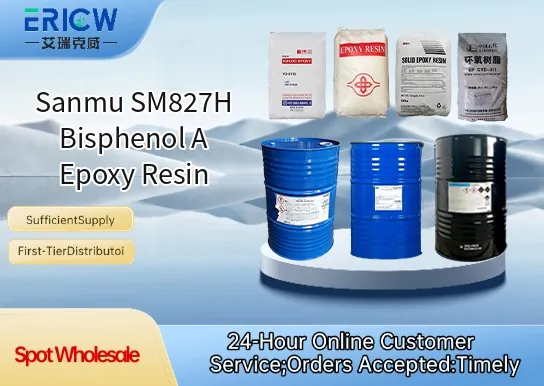
High purity bisphenol A-based epoxy resin with consistent molecular weight distribution.
Excellent thermal stability and low ionic impurity content for enhanced electrical insulation performance.
Optimized viscosity for easy handling, solvent-free processing, and compatibility with standard curing agents.
Superior adhesion to metals, glass, and composites under humid and elevated temperature conditions.
Low color value (APHA ≤ 15) ensuring clarity in transparent coatings and optical-grade encapsulants.
Electrical insulation systems for dry-type transformers and reactor windings.
Encapsulants and potting compounds for power electronics and LED modules.
High-performance composite matrices in aerospace and wind turbine blade manufacturing.
Adhesives for structural bonding in automotive and rail transport components.
Base resin for high-gloss, chemical-resistant industrial floor coatings.
| Chemical Type | Bisphenol A diglycidyl ether (DGEBA) epoxy resin |
| Product Form | Clear, pale yellow viscous liquid |
| Appearance | Homogeneous liquid, free of gels or suspended particles |
| Epoxy Equivalent Weight (EEW) | 185–192 g/eq |
| Viscosity at 25°C | 10,000–14,000 mPa·s |
| Chlorine Content (Total Cl) | ≤ 800 ppm |
| Color (APHA) | ≤ 15 |
| Softening Point | Not applicable (liquid at room temperature) |
Q1: What is the primary application niche for Sanmu SM827H?
A: Sanmu SM827H is specifically formulated for high-performance protective coatings and industrial adhesives where enhanced chemical resistance, thermal stability, and strong substrate adhesion are required—commonly used in metal primers, marine coatings, and structural bonding systems.
Q2: How does SM827H differ from standard liquid bisphenol A epoxy resins?
A: SM827H features a controlled molecular weight distribution and optimized epoxide equivalent weight, resulting in improved viscosity-activity balance and faster ambient or low-temperature cure response when paired with appropriate amine or anhydride hardeners—without requiring excessive diluent addition.
Q3: Is SM827H suitable for food-contact coating applications?
A: SM827H is not pre-certified for direct food-contact use. Formulators intending such applications must conduct full regulatory evaluation—including migration testing and compliance verification with applicable regional frameworks—as final approval depends on the complete cured system, processing conditions, and end-use scenario.
Q4: What hardeners are most commonly recommended with SM827H?
A: Aliphatic and cycloaliphatic amines (e.g., IPDA, DETA derivatives) and aromatic anhydrides (e.g., HHPA, MTHPA) are widely used to achieve balanced pot life and mechanical performance. Selection should be guided by cure schedule, flexibility requirements, and environmental exposure conditions.
Contact With Us:
E-mail: wangxingqiang@ericwchem.com
Have a Questions? Call Us:
Add:
Building A1, Jiete Industrial Park, Huangpu District, Guangzhou City, Guangdong Province, China