English
 Español
 tiếng việt
 русский
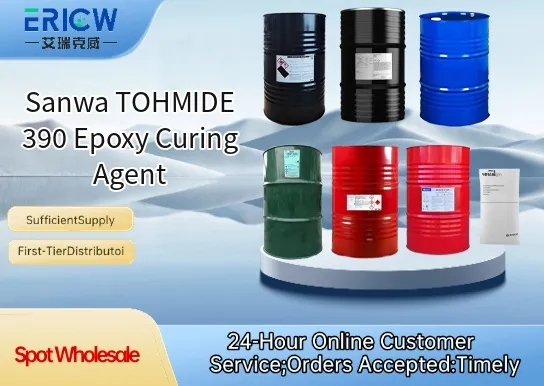
High reactivity with standard bisphenol-A and novolac epoxy resins at ambient to moderate elevated temperatures.
Excellent chemical resistance—particularly to alkalis, solvents, and weak acids—after full cure.
Low viscosity enables easy handling, uniform mixing, and improved wetting of fillers and reinforcements.
Low volatility and low odor profile support safer workplace handling and reduced VOC emissions.
Provides high glass transition temperature (Tg) and superior mechanical strength in cured systems.
Electrical insulation coatings for transformers, busbars, and switchgear components.
Structural adhesives for aerospace composite bonding and metal-to-composite assemblies.
High-performance potting and encapsulation compounds for power electronics and LED modules.
Heavy-duty protective coatings for marine and offshore infrastructure.
Carbon fiber prepreg systems requiring precise cure control and dimensional stability.
| Chemical Type | Aromatic amine-based curing agent |
| Product Form | Liquid |
| Appearance | Pale yellow to amber clear liquid |
| Density (25°C) | 1.08–1.12 g/cm³ |
| Viscosity (25°C) | 250–450 mPa·s |
| Amine Value | 380–420 mg KOH/g |
| Primary Applications | Epoxy resin curing for high-performance composites, coatings, and adhesives |
| Key Features | Fast ambient cure, low volatility, high Tg capability, excellent adhesion |
Q1: What type of epoxy systems is Sanwa TOHMIDE 390 best suited for?
A: Sanwa TOHMIDE 390 is a latent, thermally activated curing agent designed primarily for aromatic and cycloaliphatic epoxy resins. It is commonly used in high-performance coatings, electrical encapsulants, and structural adhesives where extended pot life at ambient temperature and rapid, uniform cure upon heating are required.
Q2: What is the typical activation temperature range for full cure?
A: Full crosslinking typically begins above 120 °C and proceeds efficiently between 140–180 °C. The exact onset and rate depend on formulation composition, thermal history, and desired final properties — optimization is recommended for each application.
Q3: How does TOHMIDE 390 compare to traditional amine-based hardeners in terms of handling and stability?
A: Unlike many reactive amines, TOHMIDE 390 exhibits excellent shelf stability and low volatility, with minimal odor and reduced skin sensitization risk. Its latent nature provides significantly longer working time at room temperature while maintaining reliable reactivity under controlled thermal conditions.
Q4: Is TOHMIDE 390 compatible with common epoxy diluents and additives?
A: Yes — it demonstrates good compatibility with standard reactive diluents (e.g., glycidyl ethers), fillers, pigments, and UV stabilizers. However, compatibility should be verified experimentally when incorporating acid-functional or highly polar additives that may influence latency or cure kinetics.
Q5: What safety precautions should be observed during handling?
A: While TOHMIDE 390 has lower acute toxicity and irritation potential compared to many conventional hardeners, standard industrial hygiene practices apply: use appropriate PPE (gloves, eye protection, ventilation), avoid prolonged skin contact, and consult the Safety Data Sheet for detailed handling, storage, and first-aid guidance.
Contact With Us:
E-mail: wangxingqiang@ericwchem.com
Have a Questions? Call Us:
Add:
Building A1, Jiete Industrial Park, Huangpu District, Guangzhou City, Guangdong Province, China