English
 Español
 tiếng việt
 русский
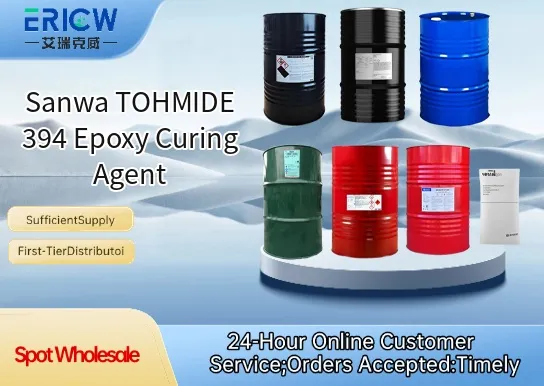
High reactivity with standard bisphenol-A and bisphenol-F epoxy resins at ambient to moderate elevated temperatures.
Delivers excellent chemical resistance, particularly to alkalis, solvents, and mild acids in cured systems.
Enables low-viscosity formulations for improved processability, including spray, dip, and brush application.
Provides outstanding adhesion to metals, composites, and concrete substrates without primer requirement.
Offers balanced pot life and rapid cure development—ideal for high-throughput industrial coating and adhesive lines.
Heavy-duty protective coatings for steel infrastructure and marine equipment.
Structural adhesives in automotive and rail vehicle assembly.
Electrical encapsulants and insulating varnishes for motors and transformers.
High-performance flooring systems for pharmaceutical and food processing facilities.
Composite matrix resin for filament-wound pressure vessels and wind turbine components.
| Chemical Type | Polyamidoamine adduct |
| Product Form | Liquid |
| Appearance | Amber to light brown transparent liquid |
| Viscosity (25°C) | 800–1,200 mPa·s |
| Amine Value | 320–360 mg KOH/g |
| Active Hydrogen Equivalent Weight | 170–190 g/eq |
| Density (25°C) | 0.98–1.02 g/cm³ |
| Shelf Life (unopened, 5–30°C) | 12 months |
Q1: What is the primary chemical nature of TOHMIDE 394?
A: TOHMIDE 394 is a modified aliphatic amine-based epoxy curing agent, engineered to provide balanced reactivity, low volatility, and reduced skin sensitization potential compared to conventional primary amines.
Q2: Is TOHMIDE 394 suitable for food-contact or potable water applications?
A: TOHMIDE 394 is not pre-qualified for direct food-contact or potable water applications. Formulators must conduct full regulatory evaluation—including migration testing and compliance assessment—based on final cured system composition and intended use conditions.
Q3: How does TOHMIDE 394 compare to standard DETA or DEEA in terms of handling safety?
A: Due to its structural modification, TOHMIDE 394 exhibits significantly lower vapor pressure and reduced dermal irritation potential versus traditional aliphatic amines like DETA or DEEA, supporting safer handling in industrial environments—though appropriate PPE and ventilation remain essential.
Q4: What is the typical dosage range when using TOHMIDE 394 with standard DGEBA resins?
A: Dosage is formulation-dependent but generally ranges from 0.1% to 2% by weight relative to resin solids. Optimal levels are determined empirically based on desired pot life, cure schedule, and final performance requirements such as glass transition temperature and chemical resistance.
Q5: Can TOHMIDE 394 be used in ambient-cure coatings without forced heating?
A: Yes—TOHMIDE 394 enables practical ambient-cure performance in epoxy coatings and adhesives, particularly when combined with moderate humidity and optimized stoichiometry. Full property development may benefit from mild post-cure (e.g., 24–48 hours at room temperature), depending on film thickness and environmental conditions.
Contact With Us:
E-mail: wangxingqiang@ericwchem.com
Have a Questions? Call Us:
Add:
Building A1, Jiete Industrial Park, Huangpu District, Guangzhou City, Guangdong Province, China