English
 Español
 tiếng việt
 русский
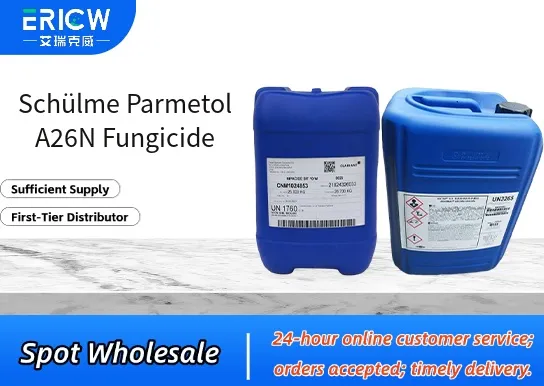
Broad-spectrum fungicidal activity against key Ascomycete and Basidiomycete pathogens.
Non-volatile formulation with low vapor pressure, ensuring reduced atmospheric migration and improved workplace safety.
Compatible with common industrial water-based systems including paints, coatings, adhesives, and polymer emulsions.
Stable across a wide pH range (pH 4–10), maintaining efficacy in diverse formulation environments.
Low ecotoxicity profile with favorable aquatic toxicity data (OECD 201/202 compliant).
Preservative in architectural and industrial waterborne paints and coatings.
Fungistatic additive for acrylic and styrene-butadiene polymer emulsions.
Protective agent in paper coatings and pigment dispersions.
Stabilizer in wood adhesive formulations to prevent mold growth during storage.
Antifungal component in construction sealants and caulking compounds.
| Chemical Type | Isothiazolinone-based biocide (active ingredient: 2-Methylisothiazolinone and 5-Chloro-2-methylisothiazolinone blend) |
| Product Form | Aqueous solution |
| Appearance | Clear, pale yellow liquid |
| pH (1% aqueous solution) | 3.0 – 5.0 |
| Density (20 °C) | 1.08 – 1.12 g/cm³ |
| Solubility | Miscible with water and polar organic solvents (e.g., glycols, alcohols) |
| Shelf Life (unopened, 5–25 °C) | 24 months |
| Primary Applications | Industrial preservative for water-based formulations |
Q1: What is the primary mode of action of Schülme Parmetol A26N?
A: Schülme Parmetol A26N functions as a broad-spectrum fungistatic agent, primarily inhibiting fungal growth through interference with key metabolic pathways essential for cell viability. Its active ingredient is designed to provide persistent protection in non-oxidizing systems without rapid depletion.
Q2: In which types of industrial systems is Parmetol A26N typically applied?
A: It is commonly used in water-based industrial formulations such as metalworking fluids, latex emulsions, adhesives, and waterborne coatings—particularly where long-term microbial stability is required under moderate temperature and pH conditions.
Q3: How should Parmetol A26N be incorporated into a formulation?
A: The product is fully miscible with water and many common organic solvents. It is generally added during the final stage of formulation, after pH adjustment and cooling, to ensure optimal stability and efficacy. Dosage depends on formulation requirements but typically ranges from 0.1% to 2% by weight.
Q4: Is Parmetol A26N compatible with common biocides or preservatives?
A: Yes, it demonstrates good compatibility with several isothiazolinones, formaldehyde donors, and benzisothiazolinone-based preservatives when used within recommended concentration ranges. Compatibility testing under actual formulation conditions is advised prior to full-scale implementation.
Q5: What safety and handling precautions should be observed?
A: As with all industrial biocides, appropriate personal protective equipment—including gloves and eye protection—should be worn during handling. Avoid inhalation of mists or prolonged skin contact. Refer to the Safety Data Sheet for detailed toxicological and first-aid information.
Contact With Us:
E-mail: wangxingqiang@ericwchem.com
Have a Questions? Call Us:
Add:
Building A1, Jiete Industrial Park, Huangpu District, Guangzhou City, Guangdong Province, China