English
 Español
 tiếng việt
 русский
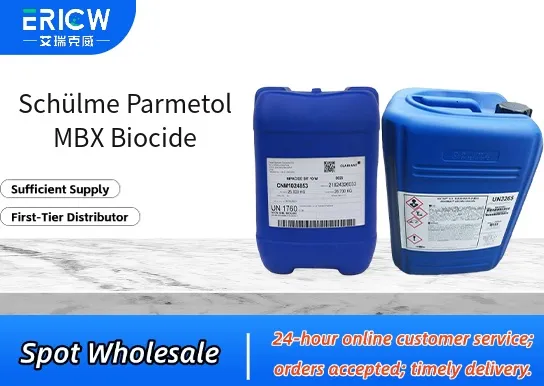
Broad-spectrum antimicrobial activity against bacteria, fungi, and algae.
Excellent stability in water-based systems across a wide pH range (pH 4–10).
Low volatility and minimal odor, enhancing workplace safety and handling convenience.
Compatible with common surfactants, thickeners, and other formulation ingredients.
Non-oxidizing mode of action, reducing corrosion risk in metal-containing systems.
Preservation of water-based paints and coatings.
Microbial control in architectural and industrial adhesives.
Protection of latex emulsions during storage and transport.
Stabilization of construction chemicals including grouts and sealants.
Preservation of water-based inks and pigment dispersions.
| Chemical Type | Isothiazolinone-based biocide blend |
| Product Form | Liquid concentrate |
| Appearance | Pale yellow to amber clear liquid |
| pH (1% aqueous solution) | 3.5–5.5 |
| Density (20°C) | 1.08–1.12 g/cm³ |
| Solubility | Completely miscible with water |
| Primary Applications | Preservative for water-based industrial formulations |
| Key Features | Broad-spectrum, non-oxidizing, low-VOC compliant |
Q1: What is the primary mode of action of Schülme Parmetol MBX Biocide?
A: Schülme Parmetol MBX Biocide functions as a broad-spectrum antimicrobial agent, primarily inhibiting microbial growth through disruption of essential cellular processes in bacteria, yeasts, and molds. Its formulation is designed for effective preservation in water-based industrial systems without compromising product stability.
Q2: In which types of formulations is Parmetol MBX typically used?
A: Parmetol MBX is commonly incorporated into water-miscible industrial products such as metalworking fluids, latex paints, adhesives, construction chemicals, and cleaning concentrates—especially where long-term microbiological stability and compatibility with anionic and nonionic surfactants are required.
Q3: Is Parmetol MBX compatible with common biocide boosters or synergists?
A: Yes, Parmetol MBX demonstrates good compatibility with several complementary preservatives—including isothiazolinones and formaldehyde releasers—enabling synergistic activity in challenging formulations. Compatibility testing under actual use conditions is recommended to confirm performance and stability.
Q4: How should Parmetol MBX be added during manufacturing?
A: For optimal dispersion and efficacy, Parmetol MBX should be added during the aqueous phase of formulation—typically after neutralization and cooling, and prior to final homogenization. It is generally introduced as a pre-diluted solution to ensure uniform distribution and avoid localized high concentrations.
Q5: Does Parmetol MBX require pH adjustment for optimal performance?
A: Parmetol MBX performs effectively across a broad pH range (approximately 4–10), with peak stability and antimicrobial activity observed in mildly acidic to neutral conditions. Significant deviation outside this range may affect shelf life or efficacy and warrants application-specific evaluation.
Contact With Us:
E-mail: wangxingqiang@ericwchem.com
Have a Questions? Call Us:
Add:
Building A1, Jiete Industrial Park, Huangpu District, Guangzhou City, Guangdong Province, China