English
 Español
 tiếng việt
 русский
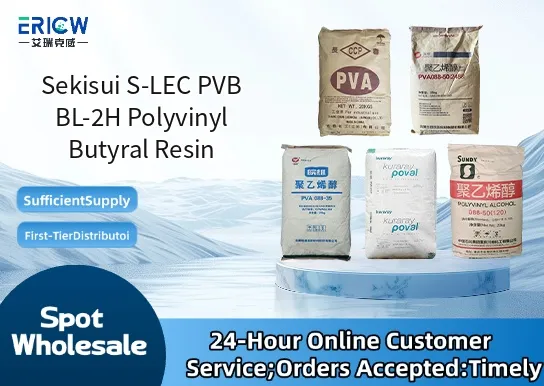
High clarity and excellent optical transparency for premium interlayer performance.
Superior adhesion to glass and polycarbonate substrates under standard lamination conditions.
Optimized melt flow characteristics enabling stable, high-speed extrusion and film casting.
Consistent thermal stability with low volatile content, supporting reliable industrial processing.
Enhanced UV resistance and long-term yellowing resistance for durable safety glazing applications.
Automotive laminated safety glass (windshields, side windows, sunroofs).
Architectural laminated glass for façades, skylights, and interior partitions.
Security and blast-resistant glazing systems.
Photovoltaic module encapsulation (frontsheet interlayer in bifacial and building-integrated PV).
| Chemical Type | Polyvinyl butyral (PVB) resin |
| Product Form | Free-flowing white granules |
| Appearance | Off-white to light yellow granular solid |
| Butyral Content | 68–70 wt% |
| Hydroxyl Content | 18–22 wt% |
| Volatile Matter (105°C, 2 h) | ≤ 0.5 wt% |
| Melt Flow Rate (190°C, 2.16 kg) | 8–12 g/10 min |
| Primary Applications | Laminated safety glass interlayers |
Q1: What is the primary functional role of S-LEC PVB BL-2H in coating and adhesive formulations?
A: S-LEC PVB BL-2H serves primarily as a film-forming binder and adhesion promoter, enhancing cohesion, substrate wetting, and interlayer compatibility—especially in multilayer systems involving glass, metals, or polar polymers.
Q2: How does BL-2H differ from other grades in the S-LEC PVB series, such as BL-1 or BL-3?
A: BL-2H is formulated with a balanced butyralization degree and molecular weight profile, offering improved solubility in common organic solvent blends and enhanced compatibility with acrylic and epoxy resins compared to higher- or lower-butyralized variants.
Q3: Is S-LEC PVB BL-2H suitable for use in safety glass interlayers?
A: While S-LEC PVB resins are widely used in laminated safety glass applications, BL-2H is specifically optimized for coatings, primers, and specialty adhesives—not structural interlayers. For architectural or automotive laminated glass, dedicated high-molecular-weight, high-clarity interlayer grades are recommended.
Q4: What solvent systems are typically recommended for dissolving BL-2H?
A: BL-2H exhibits good solubility in mixtures containing alcohols (e.g., ethanol, isopropanol), ketones (e.g., methyl ethyl ketone, acetone), and esters (e.g., ethyl acetate), often used in combination to achieve optimal viscosity and drying characteristics.
Q5: Can BL-2H be blended with thermosetting resins like melamine-formaldehyde or phenolic systems?
A: Yes—BL-2H is commonly co-formulated with amino resins and phenolics to improve flexibility, impact resistance, and surface hardness in baked coatings, particularly for metal packaging and appliance finishes.
Contact With Us:
E-mail: wangxingqiang@ericwchem.com
Have a Questions? Call Us:
Add:
Building A1, Jiete Industrial Park, Huangpu District, Guangzhou City, Guangdong Province, China