English
 Español
 tiếng việt
 русский
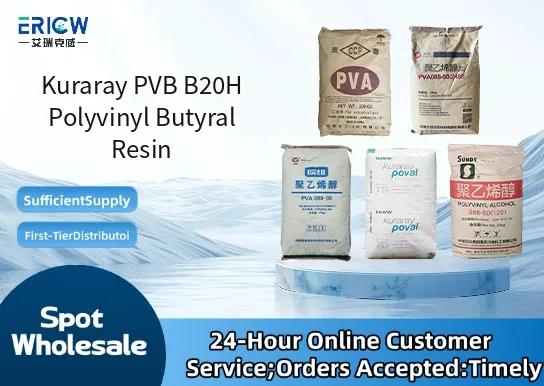
High clarity and excellent optical transparency for premium laminated safety glass performance.
Optimized melt flow and processing stability for consistent extrusion and casting in interlayer film production.
Superior adhesion to glass and polycarbonate substrates without requiring additional primers.
Enhanced UV resistance and long-term yellowing resistance under accelerated weathering conditions.
Controlled butyral content and narrow molecular weight distribution for balanced toughness and stiffness.
Laminated automotive windshields and side windows.
Architectural safety glazing for facades, skylights, and overhead installations.
Security and blast-resistant glass systems.
Solar photovoltaic module front-surface encapsulation layers.
Acoustic laminated glass for noise reduction in transportation and building applications.
| Chemical Type | Polyvinyl butyral (PVB) resin |
| Product Form | Free-flowing white granules |
| Appearance | Off-white to light yellow granular solid |
| Primary Applications | Interlayer film for laminated safety glass |
| Key Features | High clarity, excellent adhesion, thermal processability |
| Benefits | Improved lamination yield, reduced bubble formation, enhanced edge stability |
| Storage Conditions | Store in dry, cool, well-ventilated area; protect from moisture and direct sunlight |
| Compliance | Meets ISO 12543-3 and EN 356 for laminated glass interlayers |
Q1: What is the primary functional role of Kuraray PVB B20H in adhesive and coating formulations?
A: Kuraray PVB B20H serves primarily as a film-forming binder and adhesion promoter, enhancing cohesive strength, flexibility, and substrate wetting—especially on polar surfaces such as glass, metals, and treated plastics.
Q2: How does PVB B20H differ from standard PVB resins in terms of solubility and processing?
A: PVB B20H is specifically engineered for enhanced solubility in common organic solvent blends (e.g., alcohols, ketones, esters), enabling faster dissolution and more uniform dispersion without extended milling—making it well-suited for high-speed coating and adhesive manufacturing processes.
Q3: Is PVB B20H suitable for use in safety glass interlayers or laminated architectural glazing?
A: No—PVB B20H is formulated for industrial adhesives, coatings, and ink binders, not structural interlayer applications. It lacks the specialized plasticizer content, optical clarity requirements, and long-term durability profile needed for safety glass laminates, which require dedicated interlayer-grade PVB resins.
Q4: What types of crosslinking or curing mechanisms are compatible with PVB B20H?
A: PVB B20H is typically used in thermoplastic systems and does not self-crosslink; however, it can be effectively combined with melamine-formaldehyde or blocked isocyanate crosslinkers in heat-curable formulations to improve chemical resistance and thermal stability where required.
Contact With Us:
E-mail: wangxingqiang@ericwchem.com
Have a Questions? Call Us:
Add:
Building A1, Jiete Industrial Park, Huangpu District, Guangzhou City, Guangdong Province, China