English
 Español
 tiếng việt
 русский
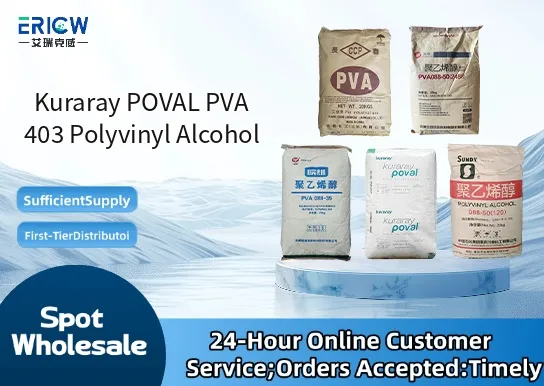
High degree of hydrolysis (≥98.5%) ensuring excellent water solubility and film-forming capability.
Low residual acetaldehyde content, meeting stringent requirements for pharmaceutical and food-contact applications.
Consistent molecular weight distribution for predictable rheology and solution stability.
Excellent adhesion to polar substrates including paper, cellulose, and metal oxides.
Biodegradable and non-toxic, supporting sustainable manufacturing and regulatory compliance (e.g., FDA, EFSA).
Water-soluble packaging films for agrochemicals, detergents, and industrial cleaners.
Binder in lithium-ion battery electrode slurries for cathode and anode materials.
Thickener and stabilizer in textile sizing formulations for high-speed weaving.
Protective coating agent in precision casting and ceramic green-body processing.
Excipient in oral fast-dissolving films (ODFs) and controlled-release pharmaceutical dosage forms.
| Chemical Type | Polyvinyl alcohol (fully hydrolyzed) |
| Product Form | White granular powder |
| Appearance | Free-flowing, odorless granules |
| Hydrolysis Degree | ≥98.5 mol% |
| Saponification Value | 495–510 mg KOH/g |
| Viscosity (4% aqueous solution, 20°C) | 3.2–4.2 mPa·s |
| Residual Acetate Content | ≤1.5 mol% |
| pH (5% aqueous solution) | 5.0–7.0 |
Q1: What is the primary functional role of POVAL PVA 403 in water-based formulations?
A: POVAL PVA 403 functions primarily as a film-forming binder and rheology modifier in aqueous systems. Its balanced hydrophilicity and moderate degree of hydrolysis enable strong cohesive strength, good adhesion to polar substrates, and stable viscosity development—making it especially suitable for coatings, adhesives, and textile sizing applications.
Q2: How does POVAL PVA 403 differ from lower- or higher-viscosity grades of Kuraray POVAL?
A: POVAL PVA 403 is classified as a medium-viscosity grade, offering a practical balance between solution handling ease and film integrity. Compared to low-viscosity grades (e.g., PVA 105), it provides enhanced body and green strength; versus high-viscosity types (e.g., PVA 224), it delivers better pumpability and faster dissolution without excessive gelation risk under standard mixing conditions.
Q3: Is POVAL PVA 403 suitable for use in food-contact applications?
A: POVAL PVA 403 is manufactured under strict quality control and is widely used in food packaging adhesives and edible film matrices. While it is not inherently classified as “food-grade” without formulation-level compliance verification, its high-purity profile and residual acetate content consistent with industry expectations for indirect food contact make it a common choice—subject to final regulatory assessment by the formulator.
Q4: What are key storage and handling recommendations to maintain product performance?
A: Store in a cool, dry environment away from direct sunlight and sources of moisture. Keep containers tightly sealed to prevent hygroscopic absorption, which may lead to clumping or inconsistent dissolution. When preparing solutions, gradual addition with vigorous agitation helps avoid surface gel formation; pre-wetting with non-solvent carriers (e.g., ethanol or glycerin) can further improve dispersion efficiency.
Contact With Us:
E-mail: wangxingqiang@ericwchem.com
Have a Questions? Call Us:
Add:
Building A1, Jiete Industrial Park, Huangpu District, Guangzhou City, Guangdong Province, China