English
 Español
 tiếng việt
 русский
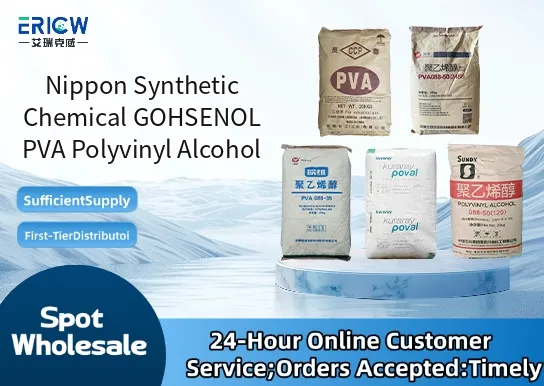
High water solubility with controllable dissolution rate based on degree of hydrolysis and molecular weight.
Excellent film-forming capability, yielding transparent, flexible, and abrasion-resistant films.
Strong adhesion to porous substrates including paper, wood, and cellulose fibers.
Biodegradable and non-toxic, compliant with food-contact and pharmaceutical-grade safety requirements.
Stable viscosity profile in aqueous solution, enabling consistent performance in industrial formulation processes.
Water-soluble packaging films for agrochemicals, detergents, and single-dose pharmaceuticals.
Binder in ceramic and refractory green bodies for improved dry strength and controlled burnout.
Thickener and stabilizer in water-based paints, adhesives, and textile sizing formulations.
Dispersant and protective colloid in emulsion polymerization (e.g., vinyl acetate, acrylics).
Support matrix in 3D printing filament (PVA sacrificial support material).
| Chemical Type | Polyvinyl alcohol (partially hydrolyzed) |
| Product Form | White to off-white free-flowing powder |
| Appearance | Free of visible impurities; homogeneous granular or flake morphology |
| Degree of Hydrolysis | 87–90 mol% (standard grade range) |
| Viscosity (4% aqueous solution, 20°C) | 22–28 mPa·s (GOHSENOL GH-17 series typical) |
| Residual Acetate Content | ≤ 13 wt% |
| pH (5% aqueous solution) | 5.0–6.5 |
| Heavy Metals (as Pb) | ≤ 5 ppm |
Q1: What are the key performance advantages of GOHSENOL PVA compared to generic polyvinyl alcohol grades?
A: GOHSENOL PVA is engineered for superior water solubility control, consistent film-forming integrity, and enhanced compatibility with diverse formulation systems—including aqueous dispersions, adhesives, and coating matrices. Its narrow molecular weight distribution and precisely controlled hydrolysis degree contribute to predictable rheology and reduced batch-to-batch variability in industrial applications.
Q2: Is GOHSENOL PVA suitable for use in water-soluble packaging films?
A: Yes—GOHSENOL PVA grades are widely selected for water-soluble packaging due to their excellent film strength, clarity, and tunable dissolution rate in cold or warm water. Performance depends on the specific grade’s degree of hydrolysis and molecular weight, and optimal film properties are typically achieved when combined with plasticizers and crosslinking modifiers in multilayer or co-extruded structures.
Q3: How should GOHSENOL PVA be dissolved for optimal dispersion in aqueous systems?
A: For best results, gradually sprinkle the powder into cold water under vigorous agitation to prevent agglomeration. Allow full wetting before heating; then raise temperature slowly to 80–95°C while maintaining shear until complete dissolution is achieved. Premixing with glycerol or low-MW alcohols may aid dispersion in high-solids formulations.
Q4: Can GOHSENOL PVA be used in textile sizing applications requiring high abrasion resistance?
A: Yes—its strong adhesion to cellulose fibers and ability to form flexible, cohesive films make it well-suited for warp sizing. When applied at appropriate concentrations and cured under controlled conditions, it delivers effective yarn protection during weaving while remaining fully removable in subsequent desizing baths.
Contact With Us:
E-mail: wangxingqiang@ericwchem.com
Have a Questions? Call Us:
Add:
Building A1, Jiete Industrial Park, Huangpu District, Guangzhou City, Guangdong Province, China