English
 Español
 tiếng việt
 русский
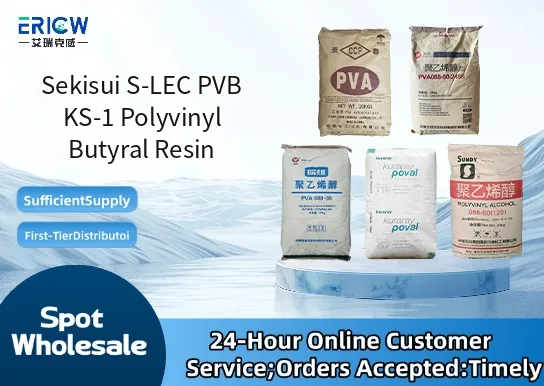
High adhesion strength to glass and polycarbonate substrates.
Excellent optical clarity and low haze for transparent laminated safety applications.
Superior impact resistance and energy absorption performance.
Good compatibility with plasticizers such as triethylene glycol di-2-ethylhexanoate (3GO).
Consistent batch-to-batch quality ensured by Sekisui’s proprietary polymerization and purification processes.
Laminated automotive windshields and side windows.
Architectural safety glazing for facades, skylights, and balustrades.
Security and blast-resistant laminated glass systems.
Photovoltaic module encapsulation interlayers.
Acoustic laminated glass for noise reduction in transportation and buildings.
| Chemical Type | Polyvinyl butyral (PVB) resin |
| Product Form | Free-flowing white granular powder |
| Appearance | White to off-white granules, free of visible specks or discoloration |
| Primary Applications | Safety laminated glass interlayer |
| Key Features | High transparency, excellent adhesion, thermal stability, and processability |
| Benefits | Enables high-yield lamination, reduces delamination risk, supports stringent automotive and building codes |
| Storage Conditions | Store in cool, dry environment at 15–25°C; protect from moisture and direct sunlight |
| Standard Packaging | 20 kg multi-layer paper/polyethylene bags with inner polyethylene liner |
Q1: What is the primary functional role of S-LEC PVB KS-1 in adhesive and coating formulations?
A: S-LEC PVB KS-1 functions primarily as a film-forming binder and adhesion promoter, enhancing cohesion, flexibility, and substrate bonding—especially on polar surfaces such as glass, metals, and treated plastics.
Q2: How does KS-1 differ from other PVB resins in the S-LEC series?
A: KS-1 is specifically designed for applications requiring balanced solubility in common organic solvents (e.g., alcohols, esters, ketones), moderate molecular weight, and optimized hydroxyl content—making it especially suitable for solvent-borne laminating adhesives and protective coatings where clarity and low viscosity are critical.
Q3: Is KS-1 compatible with common crosslinkers used in high-performance coatings?
A: Yes—KS-1 exhibits good compatibility with melamine-formaldehyde and blocked isocyanate crosslinkers, enabling thermoset network formation. Formulation stability and cure response should be verified under actual processing conditions due to sensitivity to pH and residual catalysts.
Q4: What are key handling and storage recommendations for KS-1 resin?
A: Store in original sealed containers at temperatures between 10–30 °C, away from direct sunlight and moisture. Avoid prolonged exposure to high humidity during handling, as KS-1 is hygroscopic and may experience viscosity drift or gelling if exposed to excessive ambient moisture over time.
Q5: Can KS-1 be used in food-contact or pharmaceutical packaging adhesives?
A: While PVB resins are widely used in laminated packaging, suitability for regulated food-contact or pharmaceutical applications depends on full formulation compliance—including all raw materials, processing conditions, and end-use migration testing. Sekisui does not certify KS-1 for direct food contact without additional qualification by the formulator.
Contact With Us:
E-mail: wangxingqiang@ericwchem.com
Have a Questions? Call Us:
Add:
Building A1, Jiete Industrial Park, Huangpu District, Guangzhou City, Guangdong Province, China