English
 Español
 tiếng việt
 русский
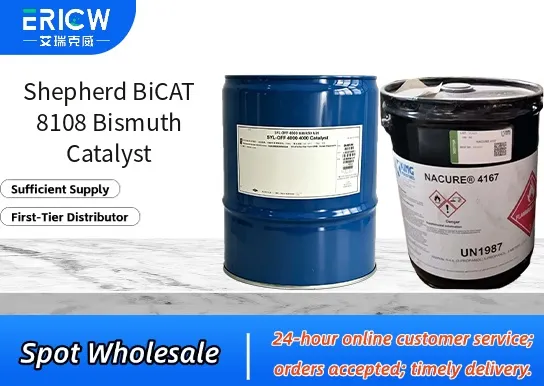
Highly selective bismuth-based catalyst for polyurethane and polyurea systems.
Low toxicity profile compared to traditional tin or mercury catalysts.
Excellent hydrolytic stability and thermal resistance up to 120 °C.
Enables precise control over gel time and demold time in rigid and flexible foams.
Compatible with common polyols, isocyanates, and blowing agents without side reactions.
Rigid polyurethane insulation foams for construction and refrigeration.
Flexible slabstock foams used in automotive seating and furniture.
Coating and adhesive formulations requiring low-VOC, metal-free catalysis.
Reaction injection molding (RIM) and structural foam applications.
Water-blown foam systems where amine catalyst interference must be minimized.
| Chemical Type | Bismuth carboxylate complex |
| Product Form | Clear to pale amber liquid |
| Appearance | Homogeneous, free-flowing liquid |
| Primary Applications | Polyurethane foams, coatings, adhesives, elastomers |
| Key Features | Non-toxic, non-volatile, halogen-free |
| Benefits | Regulatory compliant (REACH, RoHS), reduced worker exposure risk |
| Density (25 °C) | Approx. 1.45–1.55 g/cm³ |
| Storage Stability | ≥12 months at 15–25 °C in sealed container |
Q1: What is the primary function of Shepherd BiCAT 8108 in polyurethane systems?
A: Shepherd BiCAT 8108 is a bismuth-based catalyst designed to promote urethane formation (reaction between isocyanates and polyols) while offering significantly reduced toxicity and environmental impact compared to traditional tin-based alternatives such as DBTDL. It provides balanced reactivity for gelling and blowing reactions in flexible and rigid foam formulations.
Q2: Is BiCAT 8108 compatible with common polyurethane raw materials and processing conditions?
A: Yes — BiCAT 8108 demonstrates broad compatibility with aromatic and aliphatic isocyanates, conventional polyether and polyester polyols, water, physical blowing agents, and standard surfactants. It remains stable under typical processing temperatures and does not cause premature gelation or phase separation when properly dispersed.
Q3: How should BiCAT 8108 be handled and stored to maintain performance?
A: Store in original sealed containers at room temperature, away from moisture, strong oxidizers, and direct sunlight. The product is supplied as a viscous liquid and should be gently mixed before use if phase separation occurs during prolonged storage. Avoid freezing, as crystallization may affect homogeneity and require controlled warming and re-homogenization prior to dosing.
Q4: Can BiCAT 8108 replace dibutyltin dilaurate (DBTDL) on a 1:1 weight basis?
A: Not directly — due to differences in catalytic efficiency and mechanism, dosage adjustment is typically required. BiCAT 8108 is generally used at low concentrations, and optimal loading depends on formulation complexity, desired cure profile, and co-catalyst strategy. Users are advised to conduct small-scale trials to determine the most effective level for their specific system.
Contact With Us:
E-mail: wangxingqiang@ericwchem.com
Have a Questions? Call Us:
Add:
Building A1, Jiete Industrial Park, Huangpu District, Guangzhou City, Guangdong Province, China