English
 Español
 tiếng việt
 русский
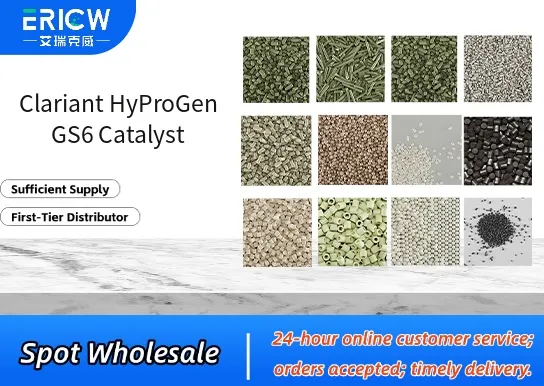
Highly selective hydrogenation catalyst optimized for green hydrogen-based purification of bio-derived feedstocks.
Thermally stable nickel–molybdenum active phase supported on high-surface-area alumina.
Low sulfur sensitivity enabling robust performance in variable-quality renewable feed streams.
Engineered for extended service life under continuous fixed-bed operation at moderate temperatures (180–240 °C).
Reduced metal leaching and minimal pressure drop, supporting sustainable process economics.
Hydrodeoxygenation (HDO) of bio-oils and pyrolysis liquids.
Purification of renewable diesel and sustainable aviation fuel (SAF) intermediates.
Hydrogenation of unsaturated fatty acid methyl esters (FAME) in biodiesel upgrading.
Treatment of cracked bio-naphtha to meet stringent sulfur and oxygen specifications.
Refining of lignin-derived monomers for circular chemical production.
| Chemical Type | Ni–Mo on γ-Al₂O₃ |
| Product Form | Extrudates (1.8–2.2 mm diameter) |
| Appearance | Gray-black cylindrical pellets |
| Primary Applications | Renewable fuel hydrotreating and bio-oil upgrading |
| Key Features | High O-removal selectivity, low H₂S generation, regenerable |
| Benefits | Extended cycle length, reduced catalyst replacement frequency, lower operating costs |
| Storage Requirement | Store in dry, inert atmosphere; avoid prolonged air exposure |
| Activation | Sulfided in situ with H₂S/H₂ mixture prior to feed introduction |
Q1: What is the primary function of HyProGen GS6 in polymer processing?
A: HyProGen GS6 is a highly selective hydrogenation catalyst designed to reduce unsaturated impurities—such as residual catalysts, peroxides, and carbonyl compounds—in thermoplastic polymers during melt processing. It helps improve long-term thermal stability, color retention, and mechanical property consistency without significantly affecting polymer rheology or molecular weight distribution.
Q2: Is HyProGen GS6 compatible with polyolefins such as PP and HDPE?
A: Yes, HyProGen GS6 is specifically developed for use in polyolefin systems, including isotactic polypropylene (iPP), random copolymers, and high-density polyethylene (HDPE). It demonstrates excellent dispersion and stability under typical extrusion and compounding conditions, with minimal risk of gel formation or plate-out.
Q3: How is HyProGen GS6 typically incorporated into polymer formulations?
A: HyProGen GS6 is supplied as a free-flowing, masterbatch-ready powder or pre-dispersed concentrate. It is generally introduced via gravimetric feeder or side-stuffer during extrusion compounding. Due to its high activity, it is typically used at low concentrations, and dosage depends on formulation requirements and the level of impurity burden in the base resin.
Q4: Does HyProGen GS6 require special handling or storage conditions?
A: Yes. As a reactive metal-based catalyst, HyProGen GS6 should be stored in a cool, dry place under inert atmosphere (e.g., nitrogen) to prevent oxidation or moisture uptake. It is recommended to keep containers sealed and avoid prolonged exposure to ambient air during handling. Standard industrial PPE—including gloves and dust masks—is advised when handling the neat powder form.
Contact With Us:
E-mail: wangxingqiang@ericwchem.com
Have a Questions? Call Us:
Add:
Building A1, Jiete Industrial Park, Huangpu District, Guangzhou City, Guangdong Province, China