English
 Español
 tiếng việt
 русский
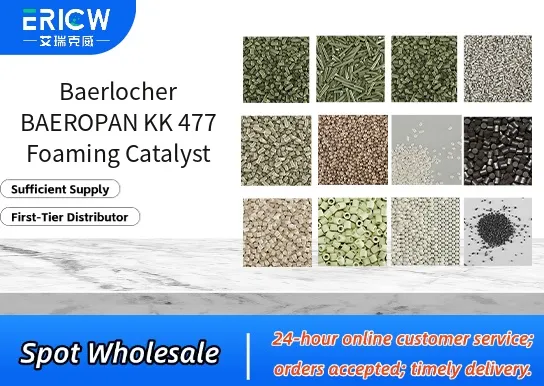
Highly efficient amine-based catalyst specifically engineered for controlled and uniform cell formation in flexible polyurethane foams.
Excellent compatibility with common polyol and isocyanate systems, minimizing phase separation and ensuring process stability.
Low volatility and reduced odor profile compared to conventional tertiary amine catalysts, supporting safer handling and improved workplace air quality.
Enables precise balance between cream time and gel time, facilitating optimal mold filling and dimensional stability in slabstock and molded foam production.
Stable performance across a wide range of formulation densities and processing temperatures, enhancing manufacturing flexibility.
Flexible slabstock polyurethane foam for bedding and furniture applications.
Molded flexible PU foam used in automotive seating and interior components.
High-resilience (HR) foam formulations requiring fine cell structure and consistent density distribution.
Composite foam systems incorporating fillers or flame retardants where catalyst compatibility is critical.
Low-emission foam systems targeting indoor air quality certifications (e.g., CertiPUR-US®, OEKO-TEX®).
| Chemical Type | Tertiary amine catalyst blend |
| Product Form | Liquid |
| Appearance | Clear, pale yellow liquid |
| Primary Applications | Foaming catalyst for flexible polyurethane foam |
| Key Features | Controlled reactivity, low volatility, good compatibility |
| Benefits | Improved foam uniformity, reduced emissions, enhanced process robustness |
| Storage Conditions | Store in original sealed container at 10–30 °C; protect from moisture and direct sunlight |
| Shelf Life | 24 months from date of manufacture under recommended storage conditions |
Q1: What is the primary function of BAEROPAN KK 477 in polyurethane foam production?
A: BAEROPAN KK 477 is a highly efficient tertiary amine foaming catalyst designed to promote the water-isocyanate reaction, thereby accelerating carbon dioxide gas generation and enabling controlled cell nucleation and foam rise in flexible and semi-rigid PU foam systems.
Q2: Is BAEROPAN KK 477 compatible with other catalysts commonly used in PU foam formulations?
A: Yes, BAEROPAN KK 477 is formulated for synergistic use with gelling catalysts such as DABCO® 33-LV or BDMA, allowing formulators to fine-tune the balance between blowing and polymerization kinetics without compromising foam stability or cure profile.
Q3: How should BAEROPAN KK 477 be handled and stored to maintain its performance?
A: Store in original sealed containers under cool, dry conditions, protected from moisture and direct sunlight. Avoid prolonged exposure to air, as it is hygroscopic and may absorb CO₂ over time, potentially affecting catalytic activity and shelf life.
Q4: Does BAEROPAN KK 477 contribute to odor or emissions in finished foam products?
A: BAEROPAN KK 477 is selected for its low volatility and favorable post-foaming behavior, supporting reduced residual amine content and lower odor impact compared to more volatile tertiary amine catalysts—making it suitable for applications where low-emission profiles are valued.
Q5: What types of polyurethane foam systems is BAEROPAN KK 477 typically used in?
A: It is widely applied in conventional and high-resilience flexible slabstock foams, as well as certain semi-rigid automotive seating and packaging foams—particularly where balanced rise time, good flow characteristics, and consistent cell structure are required.
Contact With Us:
E-mail: wangxingqiang@ericwchem.com
Have a Questions? Call Us:
Add:
Building A1, Jiete Industrial Park, Huangpu District, Guangzhou City, Guangdong Province, China