English
 Español
 tiếng việt
 русский
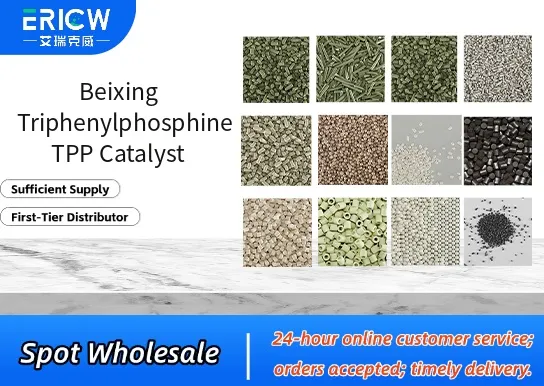
High-purity triphenylphosphine (≥99.5%) ensuring consistent catalytic performance in sensitive coupling reactions.
Low residual metal content (<5 ppm), minimizing catalyst poisoning and side reactions in palladium-catalyzed processes.
Excellent thermal stability up to 200 °C, supporting high-temperature cross-coupling applications.
Free-flowing crystalline powder with controlled particle size distribution for uniform dispersion and dosing accuracy.
Compliant with ISO 9001 manufacturing standards and supplied with full Certificate of Analysis (CoA) per batch.
Suzuki–Miyaura cross-coupling reactions for pharmaceutical intermediate synthesis.
Heck and Stille couplings in fine chemical and agrochemical manufacturing.
Ligand in palladium-based catalyst systems for LED material precursors and OLED monomers.
Stabilizing agent for colloidal metal nanoparticles used in conductive inks and printed electronics.
Key component in Wittig reaction protocols for olefin synthesis in specialty polymer production.
| Chemical Type | Triphenylphosphine (C₁₈H₁₅P) |
| Product Form | Crystalline powder |
| Appearance | White to off-white crystalline solid |
| Purity (by GC/HPLC) | ≥99.5% |
| Melting Point | 78–82 °C |
| Residue on Ignition | ≤0.1% |
| Moisture Content (Karl Fischer) | ≤0.3% |
| Primary Applications | Pd-catalyzed cross-coupling, Wittig reactions, ligand synthesis |
Q1: What is the primary role of Beixing Triphenylphosphine (TPP) in catalytic applications?
A: Beixing Triphenylphosphine serves as a versatile ligand and co-catalyst in transition-metal-catalyzed reactions—particularly palladium- and rhodium-mediated cross-coupling, hydroformylation, and hydrogenation processes. Its electron-donating properties and steric profile help stabilize active metal centers and modulate reaction selectivity and rate.
Q2: Is Beixing TPP suitable for use in high-temperature catalytic systems?
A: Yes, Beixing TPP demonstrates good thermal stability under typical homogeneous catalysis conditions (up to approximately 150–180 °C). However, prolonged exposure to elevated temperatures or strong oxidizing environments may lead to gradual phosphine oxidation; optimal performance is maintained under inert atmosphere and controlled process conditions.
Q3: How should Beixing TPP be handled and stored to maintain its activity?
A: Beixing TPP is air-sensitive and should be handled under an inert atmosphere (e.g., nitrogen or argon) whenever possible. Store in tightly sealed containers at room temperature, protected from light and moisture. For long-term storage, refrigeration (2–8 °C) under inert gas is recommended to minimize oxidation.
Q4: Can Beixing TPP be used in aqueous-phase catalysis?
A: While triphenylphosphine has limited water solubility, it can participate in aqueous-phase reactions when paired with water-soluble metal complexes, surfactants, or phase-transfer agents. For predominantly aqueous systems, modified phosphine ligands with hydrophilic substituents are often preferred—but Beixing TPP remains widely applied in biphasic or organic-phase protocols.
Contact With Us:
E-mail: wangxingqiang@ericwchem.com
Have a Questions? Call Us:
Add:
Building A1, Jiete Industrial Park, Huangpu District, Guangzhou City, Guangdong Province, China