English
 Español
 tiếng việt
 русский
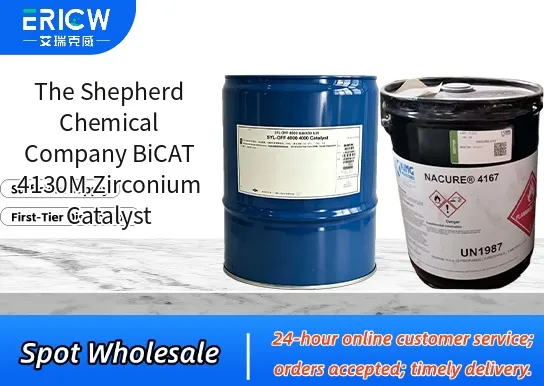
Highly selective zirconium-based catalyst for controlled polycondensation and esterification reactions.
Excellent thermal stability enabling consistent performance at elevated processing temperatures.
Low volatility and minimal residue formation, supporting high-purity end-product requirements.
Compatible with a broad range of polyester, polycarbonate, and polyurethane precursor chemistries.
Non-toxic, heavy-metal-free formulation compliant with evolving regulatory standards for industrial catalysts.
Polyester resin synthesis for coatings and adhesives.
Catalysis in aliphatic polycarbonate production.
Ester interchange reactions in bio-based polymer manufacturing.
Condensation curing of silicone-modified alkyds.
Accelerated transesterification in recyclable PET upcycling processes.
| Chemical Type | Zirconium alkoxide complex |
| Product Form | Liquid solution in organic solvent |
| Appearance | Clear, pale yellow to amber liquid |
| Primary Applications | Polyester, polycarbonate, and polyurethane synthesis |
| Key Features | High selectivity, low metal residue, thermal robustness |
| Benefits | Improved batch consistency, reduced side reactions, enhanced product clarity |
| Storage Recommendation | Store under inert atmosphere at 15–25°C; protect from moisture |
| Handling Precaution | Use in well-ventilated area; avoid contact with water or strong acids |
Q1: What is the primary function of BiCAT 4130M in polyurethane systems?
A: BiCAT 4130M is a zirconium-based catalyst designed to promote selective urethane bond formation while minimizing side reactions such as trimerization or hydrolysis, particularly in moisture-sensitive or high-performance polyurethane coatings and adhesives.
Q2: How does BiCAT 4130M compare to traditional tin-based catalysts like DBTDL?
A: Unlike stannous octoate (DBTDL), BiCAT 4130M offers reduced toxicity profile, improved hydrolytic stability, and greater selectivity for the isocyanate–hydroxyl reaction—making it suitable for applications where regulatory constraints or long-term formulation integrity are key considerations.
Q3: Is BiCAT 4130M compatible with common polyol types and isocyanates used in industrial formulations?
A: Yes, BiCAT 4130M demonstrates broad compatibility with aromatic and aliphatic isocyanates (e.g., MDI, HDI, IPDI) and a wide range of polyols—including polyester, polyether, and polycarbonate diols—without significant gelation or precipitation under standard processing conditions.
Q4: What are typical handling and storage recommendations for this catalyst?
A: BiCAT 4130M should be stored in tightly sealed containers under dry, inert conditions (e.g., nitrogen blanket) at room temperature. It is moisture-sensitive and may undergo gradual hydrolysis upon prolonged exposure to ambient humidity; therefore, minimizing air and moisture ingress during handling is strongly recommended.
Q5: Can BiCAT 4130M be used in one-component (1K) moisture-cure polyurethane systems?
A: While primarily optimized for two-component (2K) systems, BiCAT 4130M may be incorporated into certain 1K formulations to fine-tune cure kinetics—but its activity toward moisture is limited compared to dedicated latent catalysts, so performance must be validated case-by-case through formulation testing.
Contact With Us:
E-mail: wangxingqiang@ericwchem.com
Have a Questions? Call Us:
Add:
Building A1, Jiete Industrial Park, Huangpu District, Guangzhou City, Guangdong Province, China