English
 Español
 tiếng việt
 русский
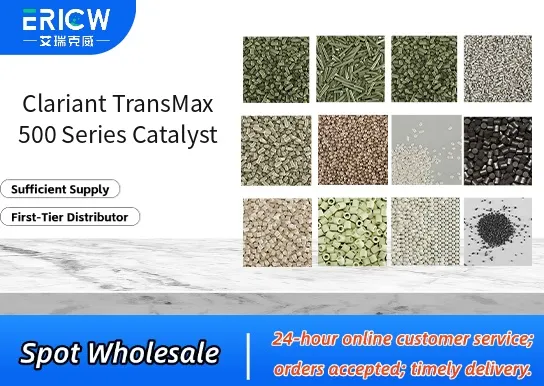
Highly selective for low-temperature CO shift conversion, enabling efficient hydrogen production with minimal side reactions.
Exceptional thermal and chemical stability under prolonged operation in industrial syngas environments.
Optimized sulfur tolerance, maintaining activity in feed streams containing trace H₂S up to 10 ppm.
Low pressure drop design suitable for fixed-bed reactors with strict flow distribution requirements.
Consistent batch-to-batch performance ensured by Clariant’s proprietary impregnation and calcination process control.
Hydrogen production via water-gas shift (WGS) in ammonia plants.
Syngas conditioning for Fischer–Tropsch synthesis and methanol manufacturing.
Refinery hydrogen generation units requiring high-purity H₂ for hydrotreating.
Biohydrogen and green hydrogen facilities integrating renewable feedstocks and flexible operation.
Coal-to-chemicals and gas-to-liquids (GTL) complexes with stringent catalyst lifetime demands.
| Chemical Type | Copper–zinc oxide–alumina based low-temperature shift (LTS) catalyst |
| Product Form | Extruded cylindrical pellets (5 mm diameter × 5–10 mm length) |
| Appearance | Grey-black free-flowing granular solid |
| Primary Applications | Low-temperature water-gas shift reaction in hydrogen and syngas plants |
| Key Features | High CO conversion at 180–240 °C; sulfur-tolerant formulation; robust mechanical strength |
| Benefits | Extended catalyst life (>3 years typical), reduced downtime, lower operating costs per ton of H₂ produced |
| Storage Conditions | Dry, well-ventilated area; protect from moisture and direct contact with air prior to reduction |
| Activation Requirement | In-situ reduction with H₂/N₂ mixture prior to service; exothermic, requires controlled ramp rate |
Q1: What is the primary function of the TransMax 500 Series in polymer processing?
A: The TransMax 500 Series is a family of high-performance transition metal catalysts designed to accelerate crosslinking and condensation reactions—particularly in silicone-based and moisture-curing systems—enabling faster cure profiles, improved green strength, and enhanced final network formation.
Q2: How does TransMax 500 differ from conventional tin-based catalysts?
A: Unlike traditional dibutyltin dilaurate (DBTDL) or stannous octoate, TransMax 500 catalysts are non-tin, offering improved regulatory acceptance, reduced toxicity concerns, and greater compatibility with sensitive formulations—while maintaining robust catalytic activity under ambient and elevated temperature conditions.
Q3: Is TransMax 500 suitable for use in food-contact or medical-grade silicones?
A: TransMax 500 catalysts are formulated to support compliance with major global regulatory expectations for indirect food contact and biocompatible elastomers. Final suitability depends on full system validation—including formulation, processing, and end-use conditions—as well as applicable regional regulatory assessments.
Q4: What is the typical dosage range for TransMax 500 in RTV-2 silicone systems?
A: Dosage is formulation-dependent but generally ranges from 0.1% to 2% by weight relative to the base polymer. Optimal loading balances cure speed, pot life, and mechanical properties—and should be determined through small-scale screening under actual processing conditions.
Contact With Us:
E-mail: wangxingqiang@ericwchem.com
Have a Questions? Call Us:
Add:
Building A1, Jiete Industrial Park, Huangpu District, Guangzhou City, Guangdong Province, China